UNDISCLOSED ROGUELIKE
A Vampire Survivors-style roguelike built by a team of five for an undisclosed client. I designed the wagon leveling system — upgrade paths, combat statistics, passive abilities, and the upgrade economy across 14 unit types — and built the procedural hex world that carried 6 vertical slices through playtests of 10+ players, until the project was sunset due to funding constraints.
// KEY_RESPONSIBILITIES
Designed the wagon leveling system, balancing upgrade paths, combat statistics, passive abilities, and the upgrade economy across 14 unit types.
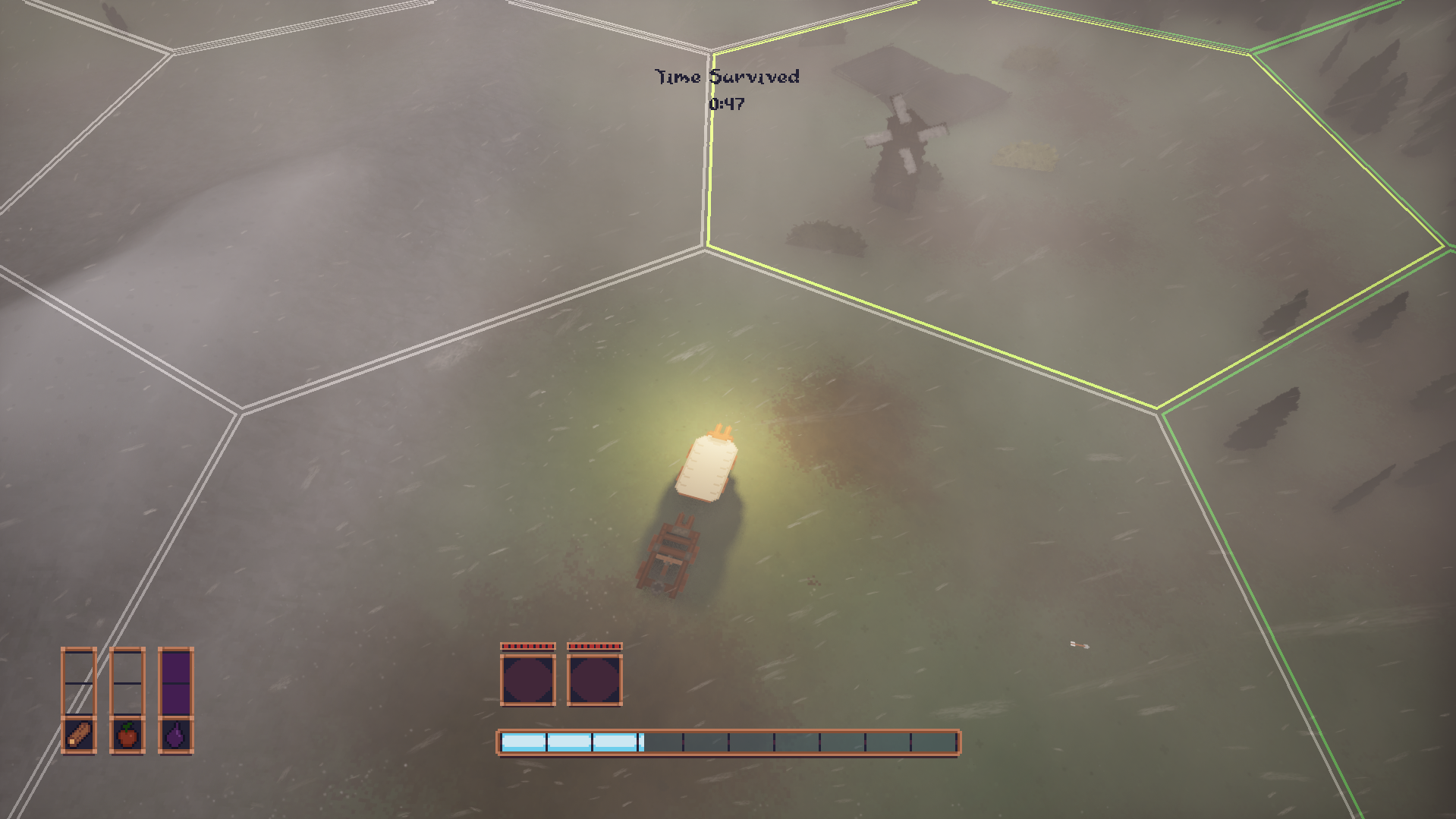
Built a hex-based procedural world generator that creates a unique map every playthrough. Used UE5 Level Instances to stream hundreds of tile variations in and out without performance impact, and implemented a custom multi-threaded tile loading system so new hexes are ready before the caravan reaches them. Each hex tile pulls from procedural rulesets governing terrain, asset spawning, and encounter points.
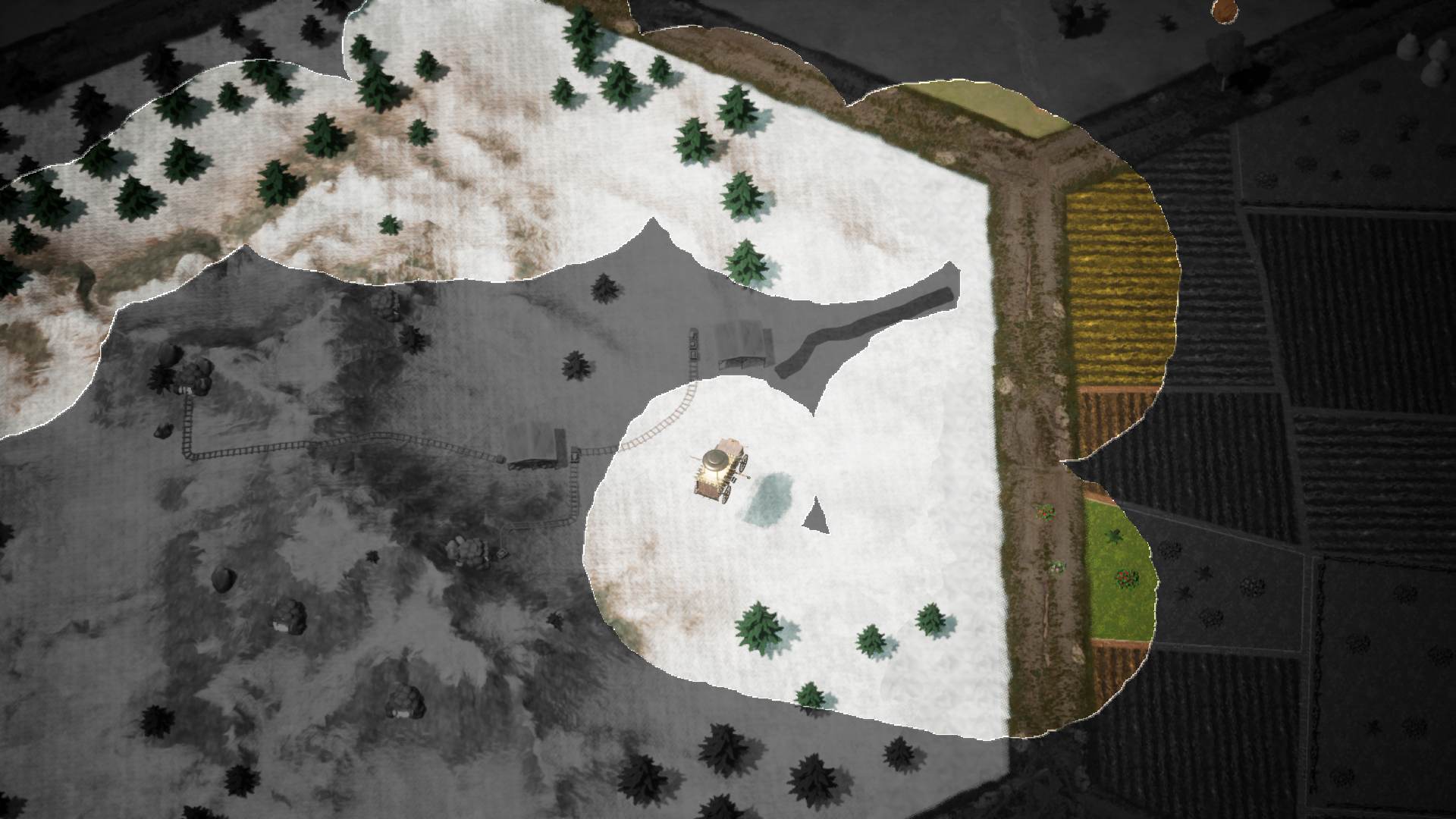
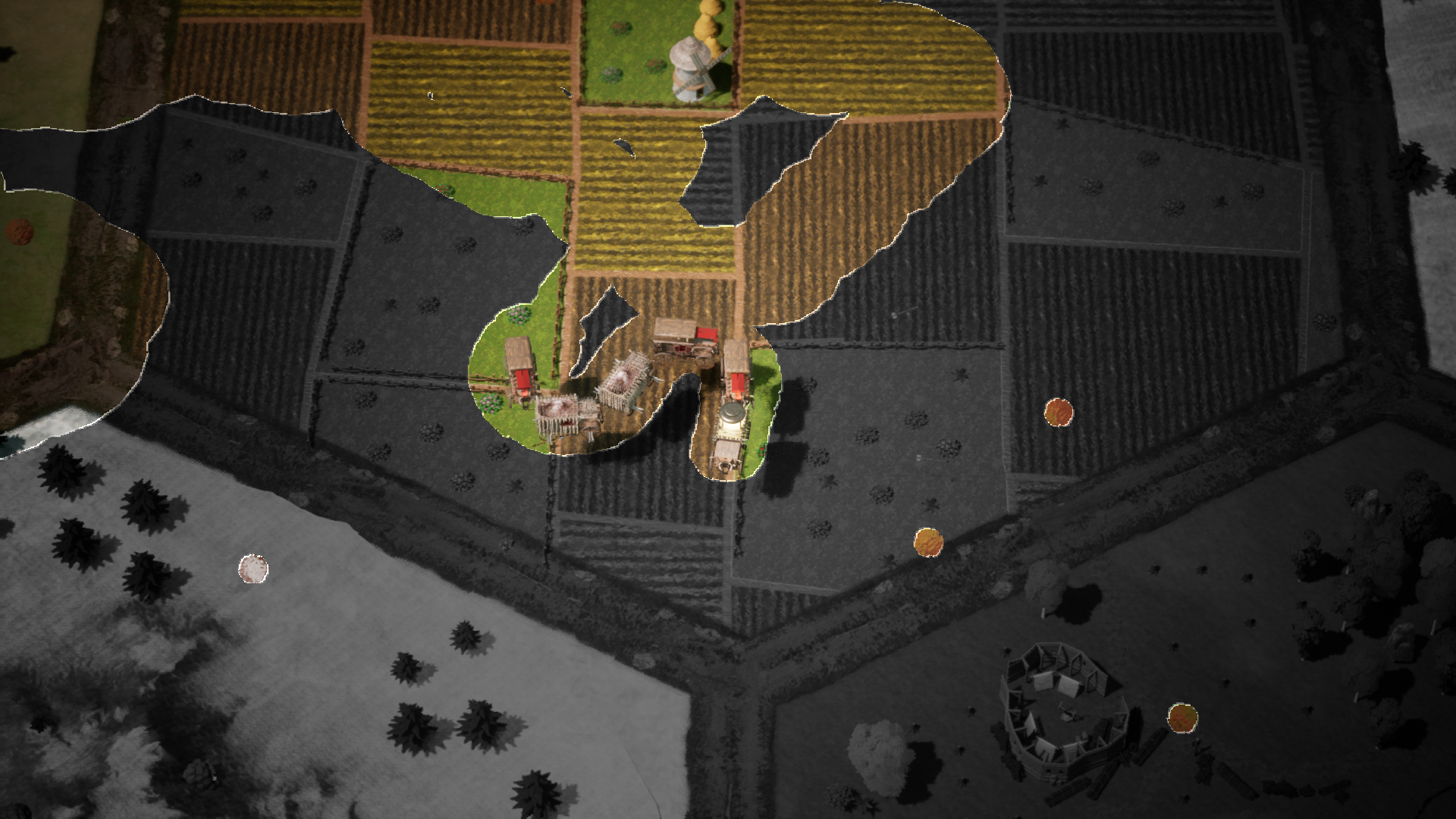
Developed a custom post-process material to visualize the core Gale vs Gloom mechanic — dynamically saturating the environment based on proximity to the player's lantern. The viewport is first globally desaturated; objects tagged as "Gale" are then re-saturated using stencil masking, noise blending, and lerps — communicating danger without any UI.
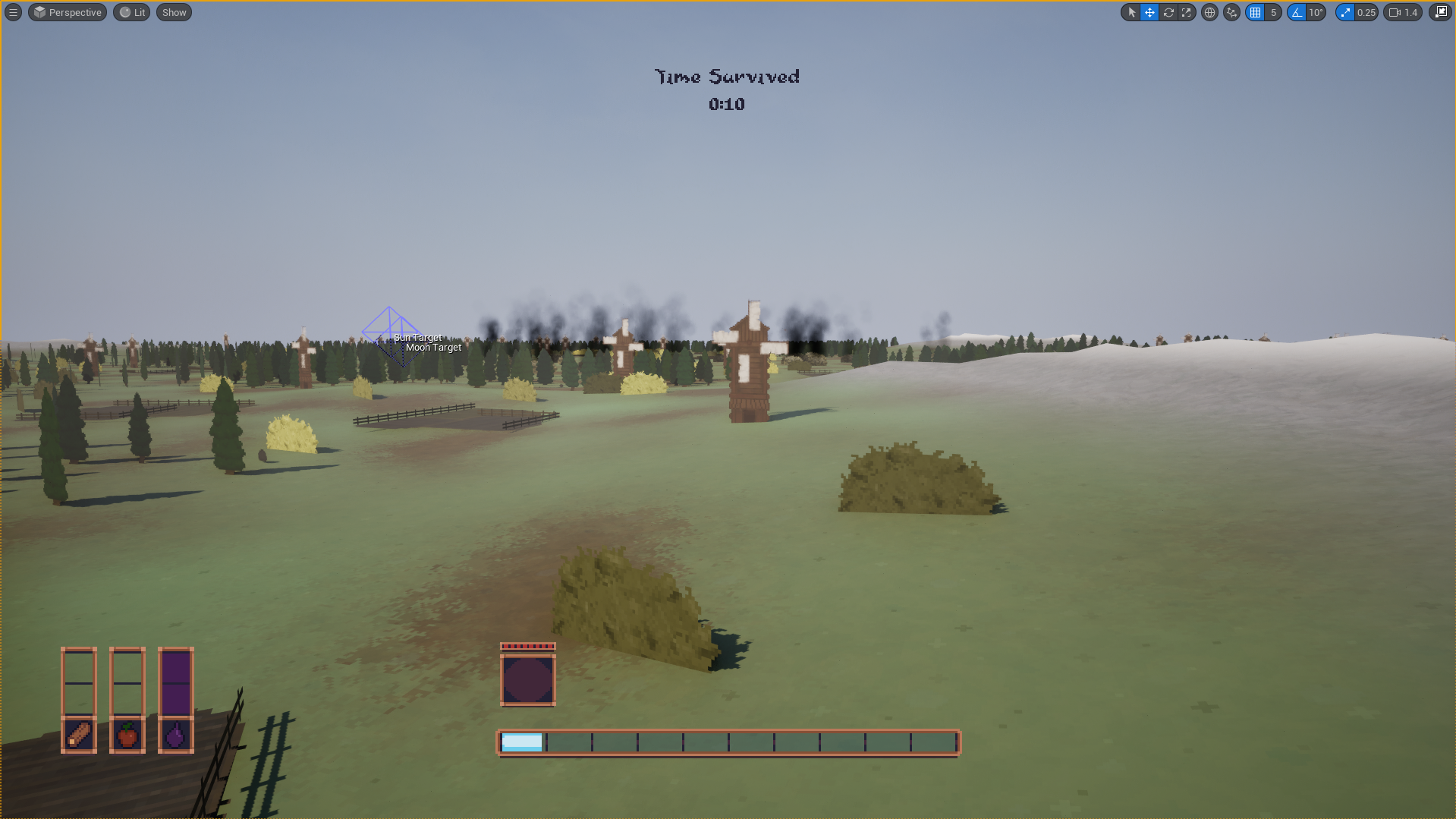
Directed the full shift from 3D to 2.5D to achieve a more defined and readable art style. Built a custom terrain system generating procedural ground planes with a tile-based structure, and used PaperZD pixel art animation blueprints for wagon attacks and state transitions.
// SCREENSHOT_LOG