AXIMA (ZYNDRAX)
Contracted level design on Axima — a fast-paced open-world monster tamer with 100+ creatures and multiplayer.
Blocked out levels in greybox, designed puzzles, worked with dev team to integrate current gameplay, developed level design tools.
>> WISHLIST ON STEAM (opens in new tab) >> VISIT THE WEBSITE (opens in new tab)// KEY_RESPONSIBILITIES
Designed the areas from concept map to blocked-out, playable geometry in Unreal Engine 5.
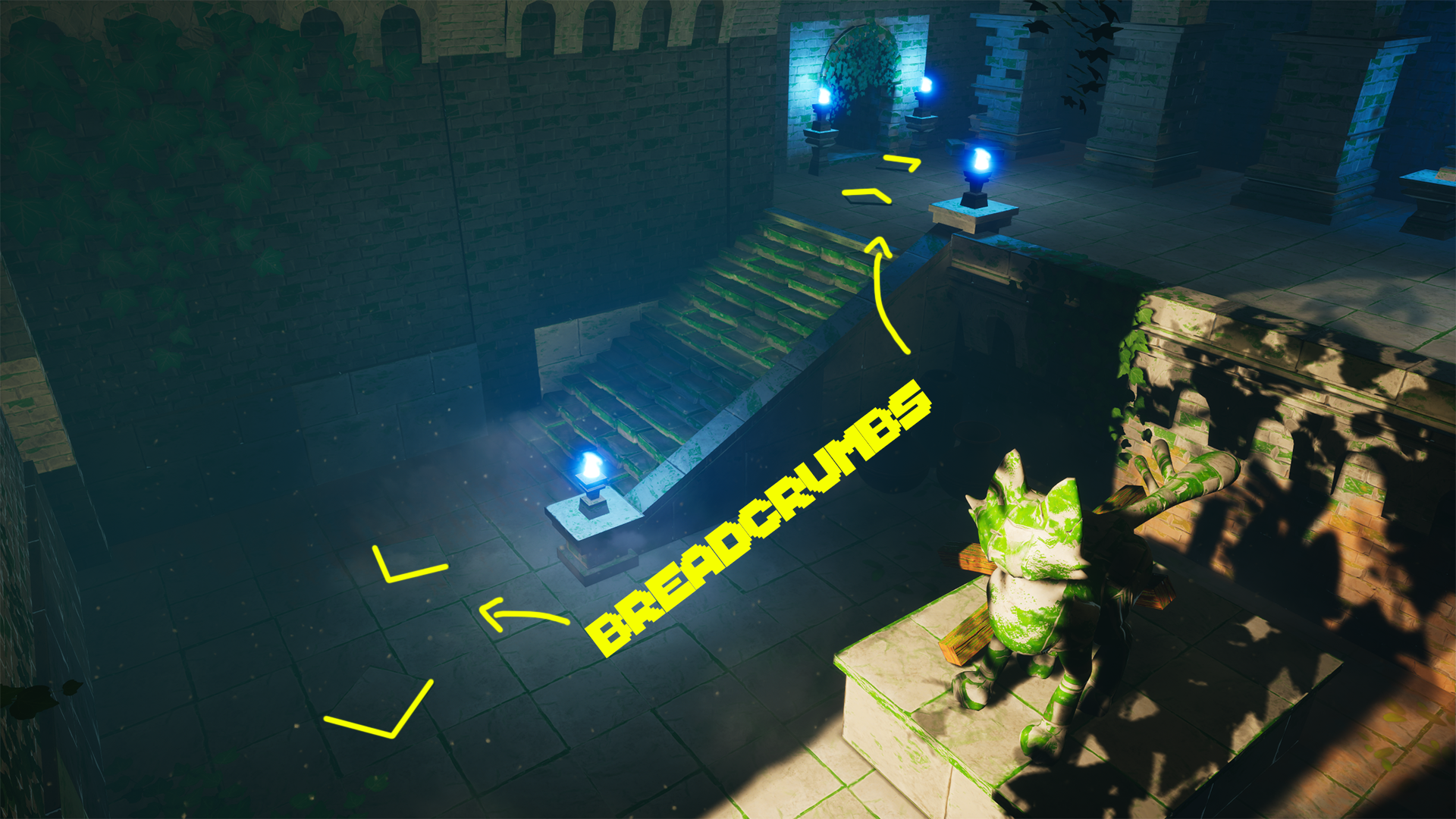
Utilized level design psychology like breadcrumbs, leading lines, and golden lighting to lead players on the intended route.
Drafted custom level design tools to speed up the environmental art pass. This included instanced static mesh walls, tileable textures, and procedural set dressing.
Designed puzzles integrated into level layout to support Axima's exploration loop. Each puzzle was designed in coordination with the design / development teams to stay consistent across levels.
// LEVEL_DESIGN_BREAKDOWN - EXAMPLE: RUINS
INITIAL SKETCH
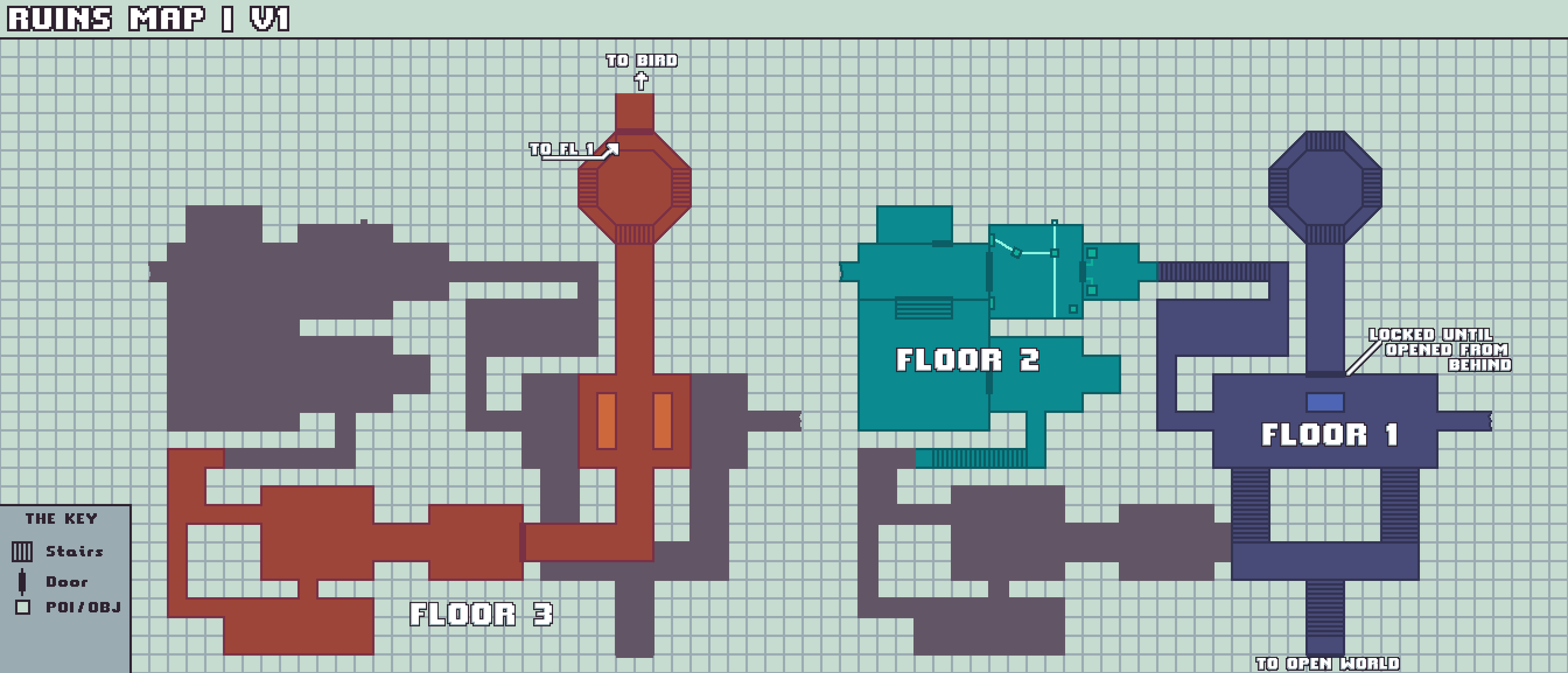
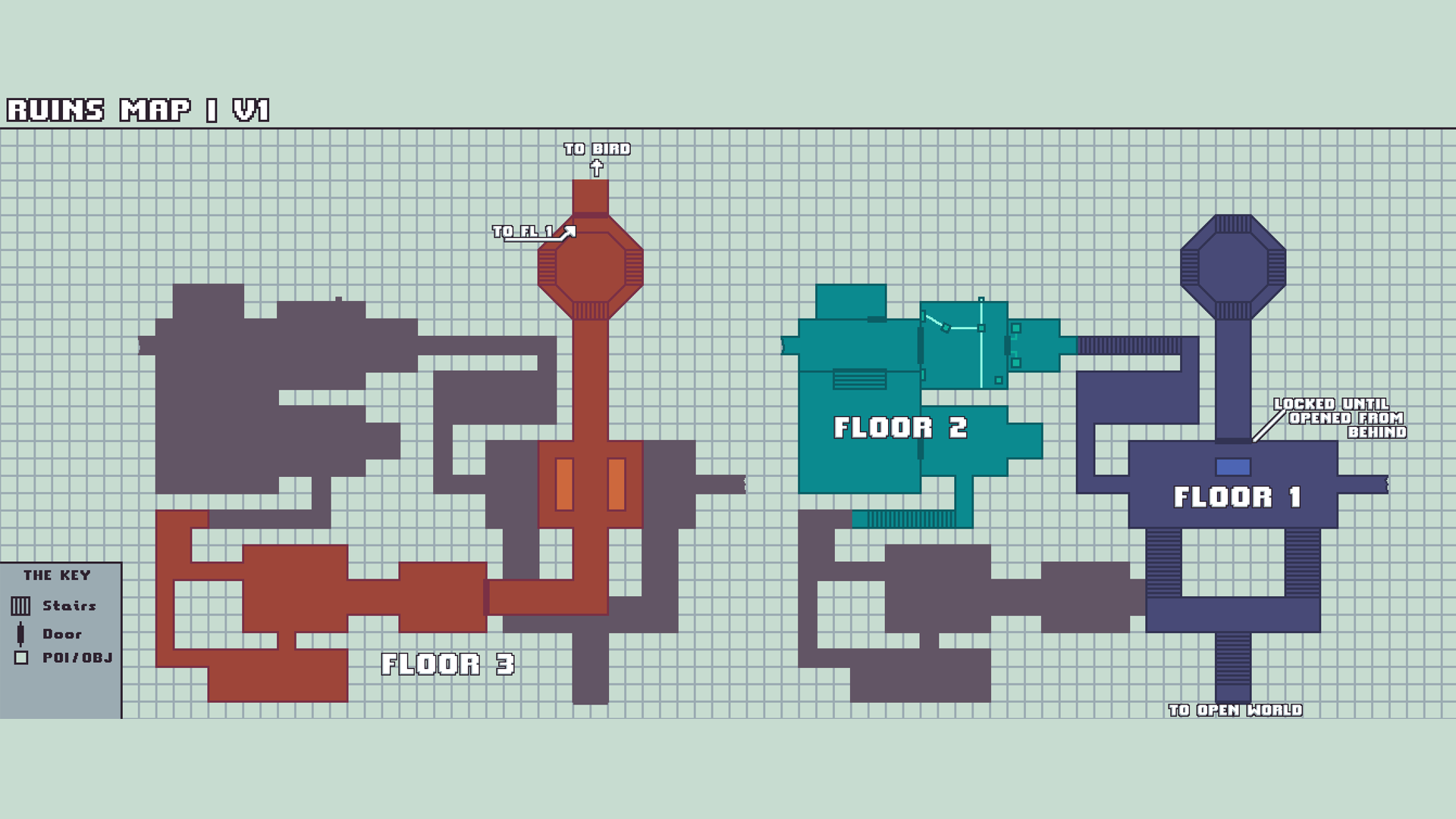
I began planning the ruins in Aseprite. Here is where I made a base that I could submit to the project lead for feedback. We wanted a pretty linear level that would take the player to a mythical Axima to collect.
ANNOTATED SKETCH
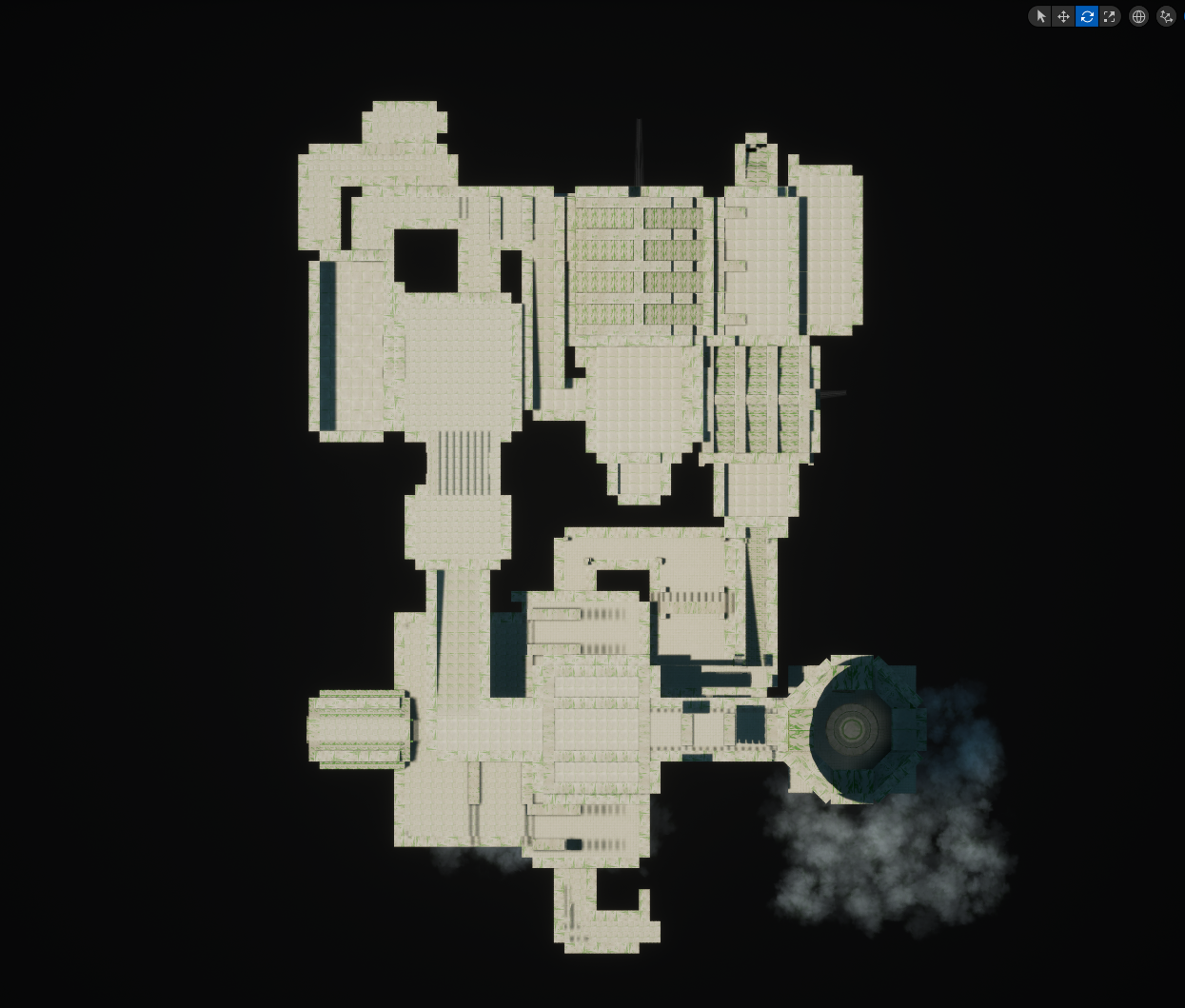
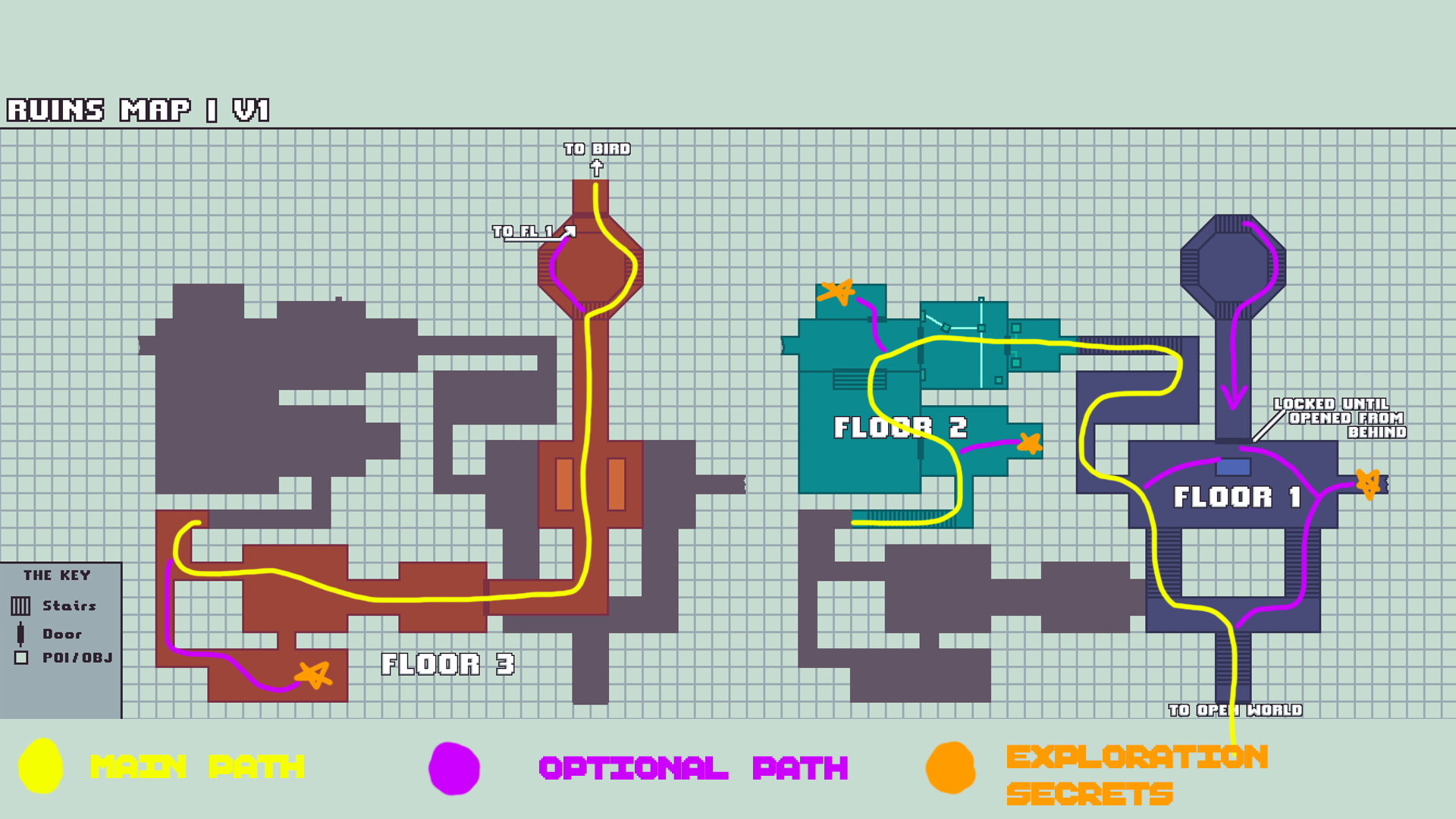
The main patch traces the intended player route as a loop, I wanted progression to always be circling to the left. It's introduced early for the player to grasp on to, then they can begin to expect to always go left if they want progression in this level.. The circular flow minimizes backtracking while letting the player read the same space from multiple angles as they progress.
The optional path explores extra pathways and puzzles I included. I wanted the ruins to be pretty easily explored and finished, but if they wanted to get some good loot along they way, they could explore and solve more challenging puzzles.
LEVEL BLOCKOUT
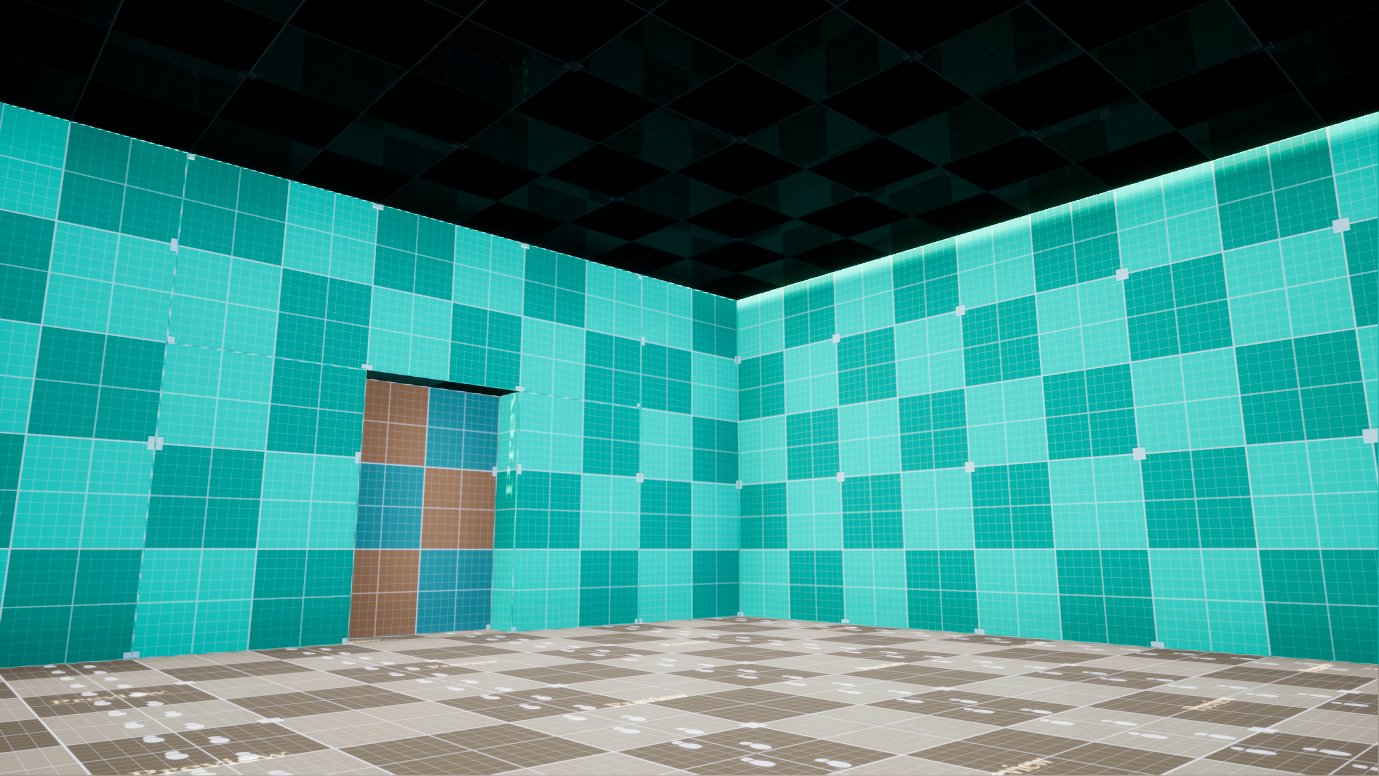
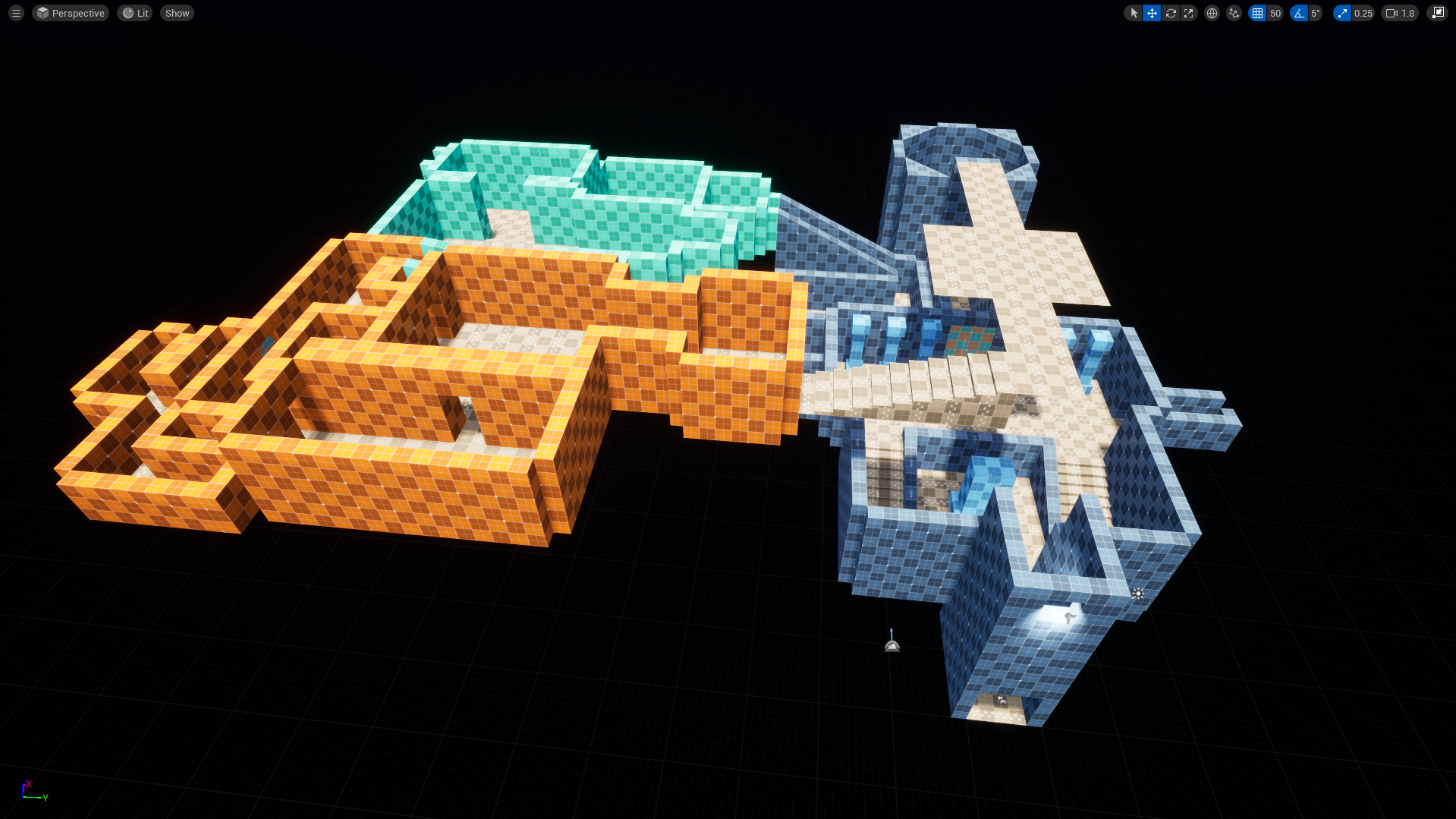
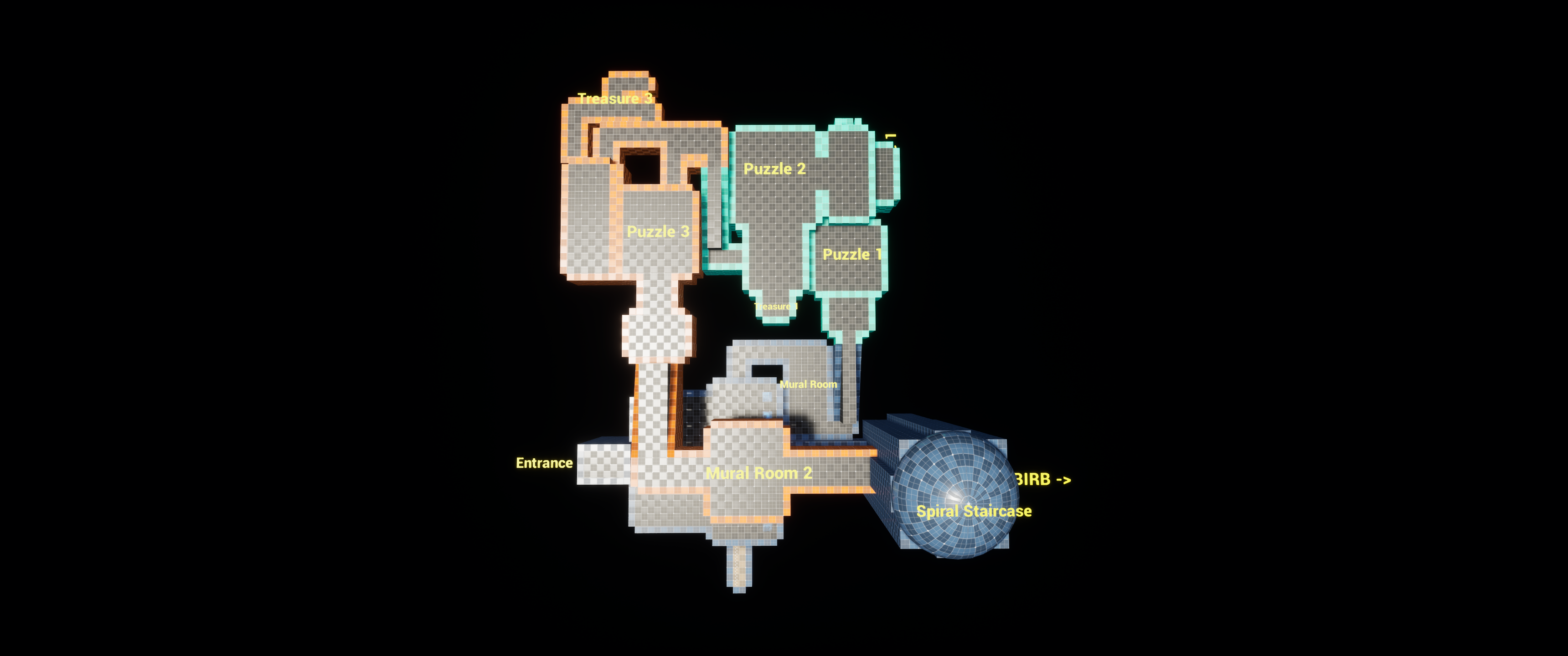
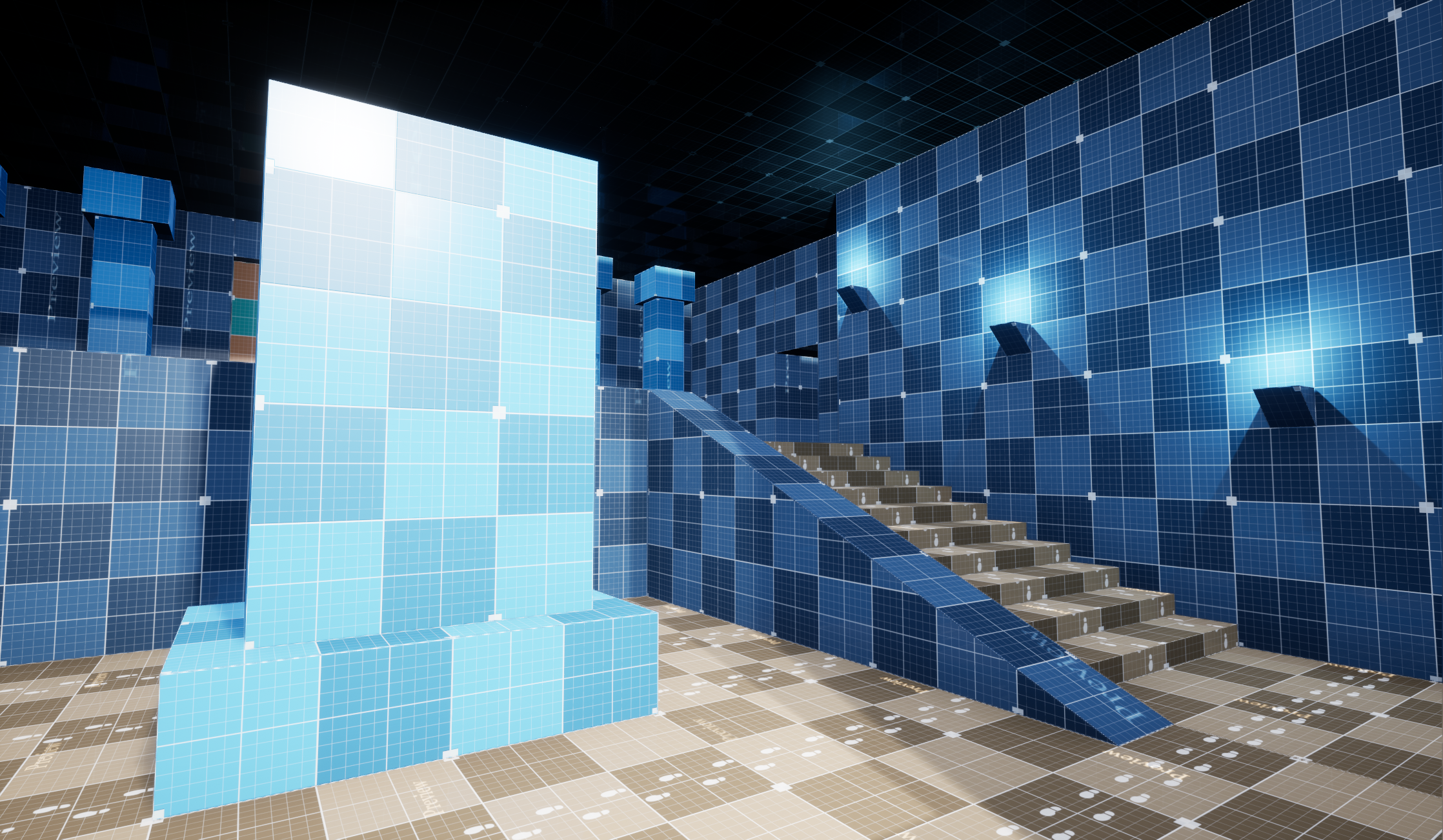
After approval, I started to build out each of the areas of the ruins. I knew that I wanted to have a lot of veritcality in the entire design, so progression is always upwards. After a couple iterations and walkthoughs with the project lead we decided to include more side passages and puzzle rooms to give the player even more exploration opportunities (which you can see aren't in the original diagram).
VERTICALITY
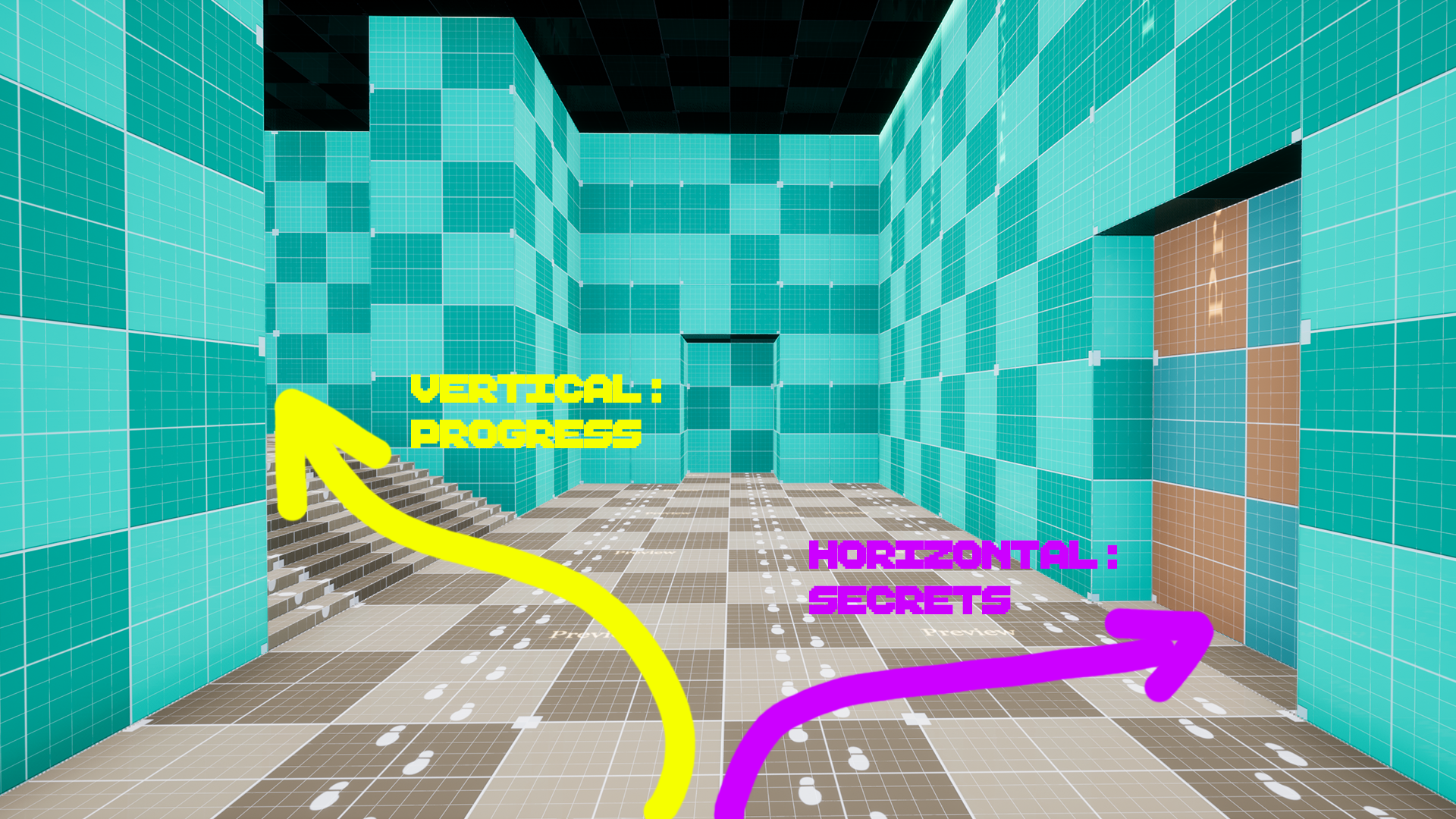
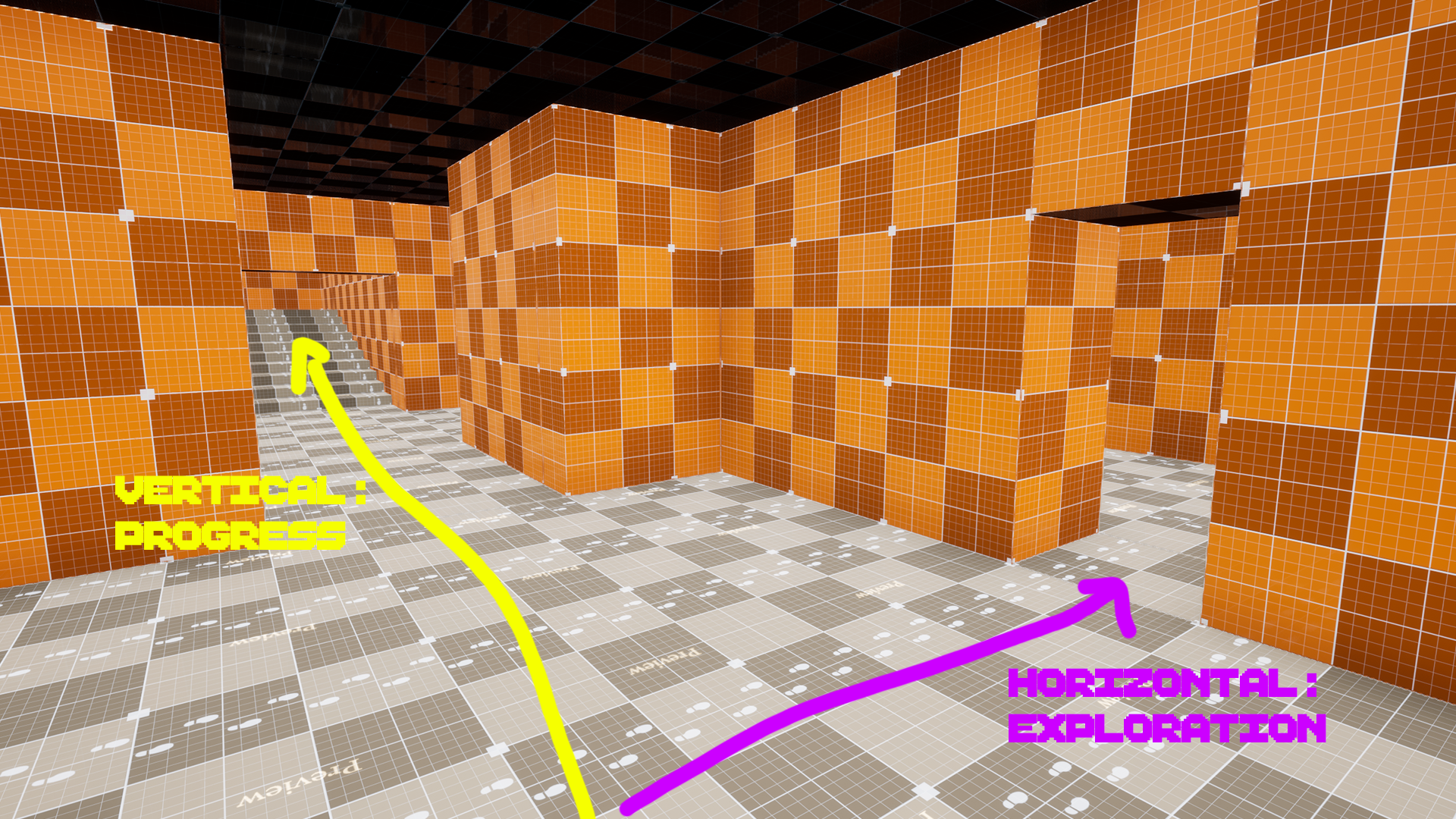
I took a very From Software approach to the design of this level (We use a good bit of souls inspiration overall), and verticality is something I think they always execute very well. Progression moves upward throughout the Ruins. Secrets and side passages were kept at or below the player's current elevation. Repeating this throughout the dungeon allows the players to adapt and know where they should go to progress vs explore.
GOLDEN LIGHTING, BREADCRUMBS, SECRETS
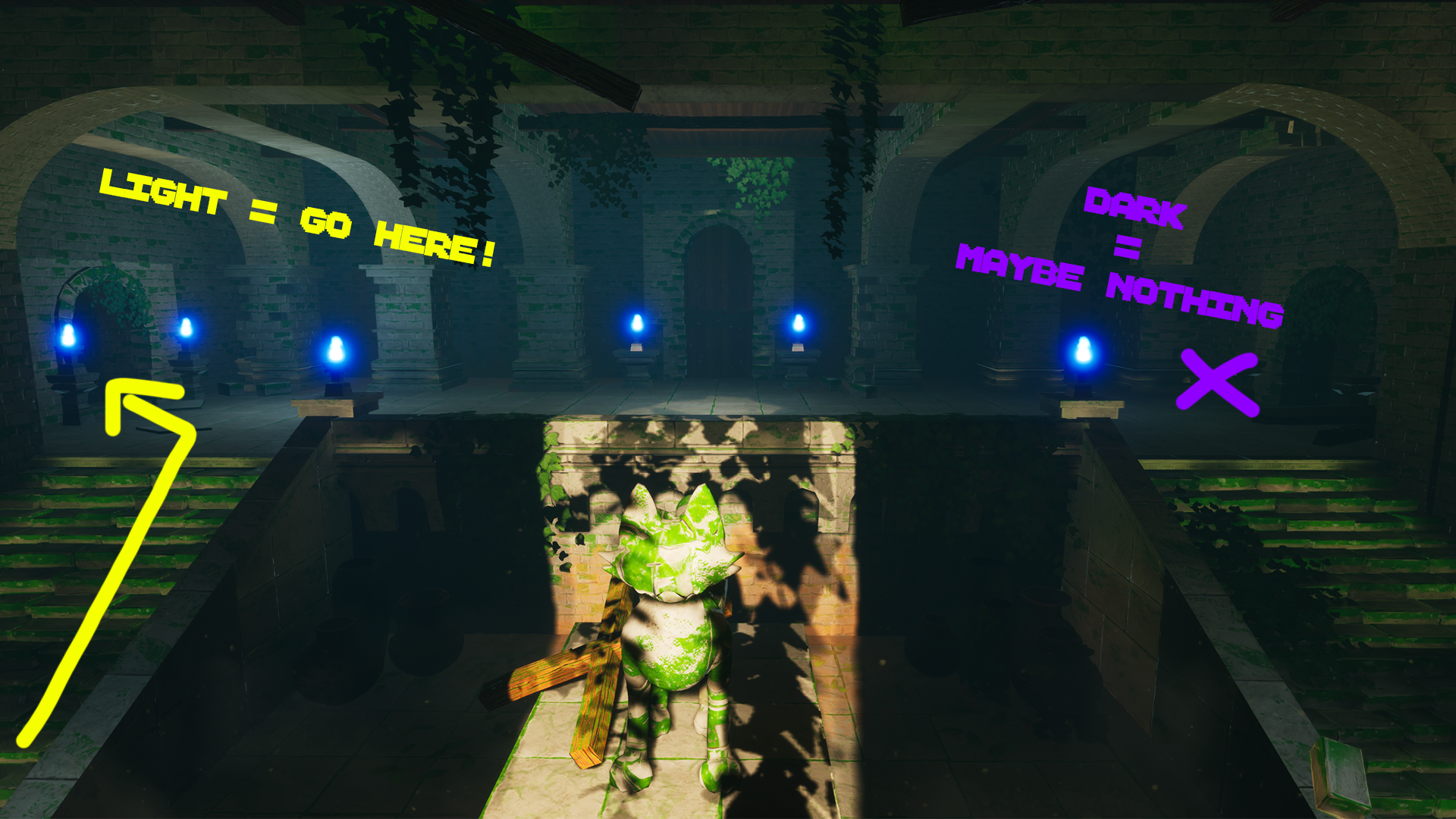
Along with the verticallity, I wanted to include a couple other things to guide the player. I wanted the ruins to look vast but not feel confusing, so I created large rooms and dead ends, but directed the player to the correct route with golden lighting, breadcrumbs, and some peaks into the secret rooms.
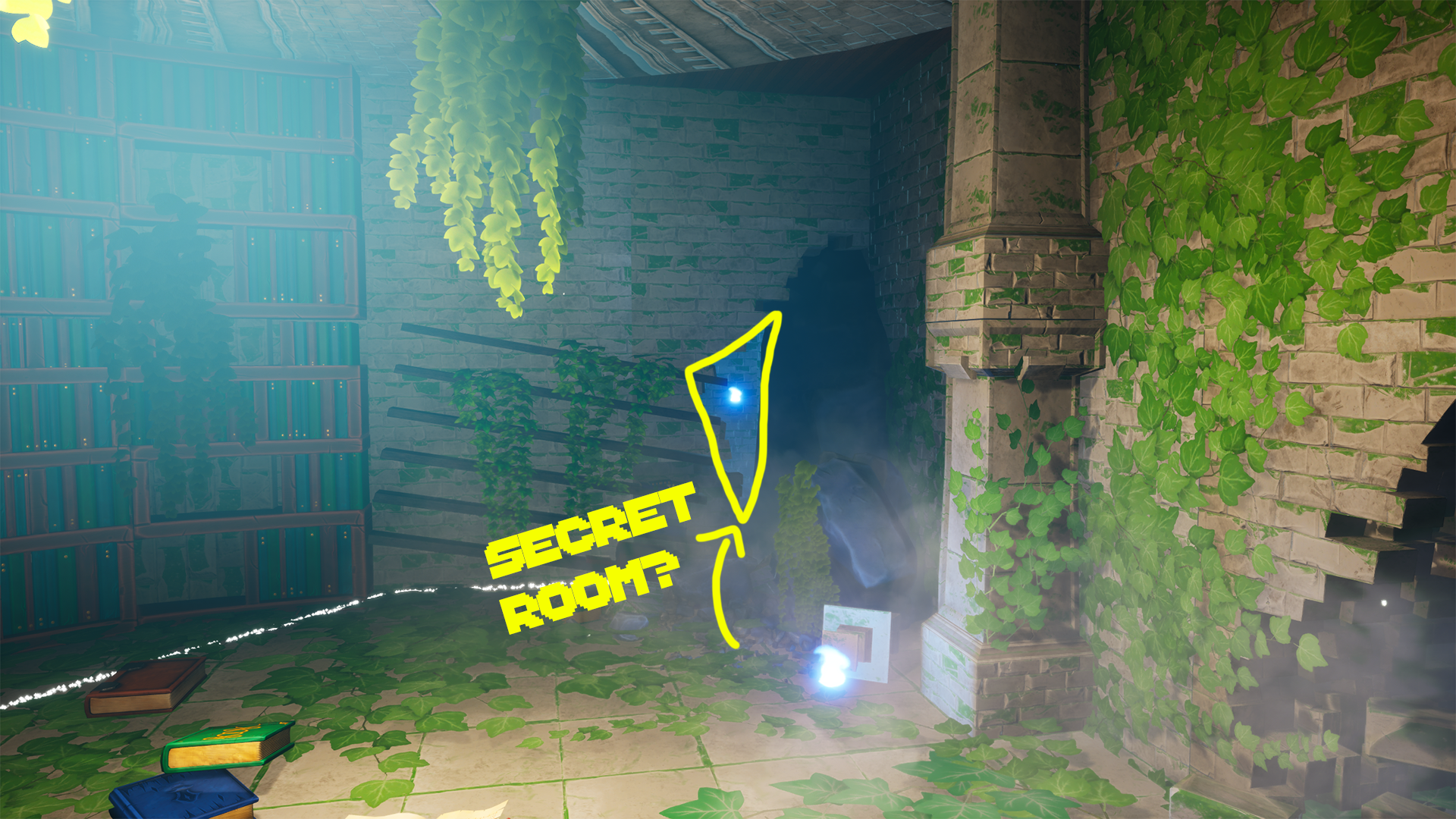
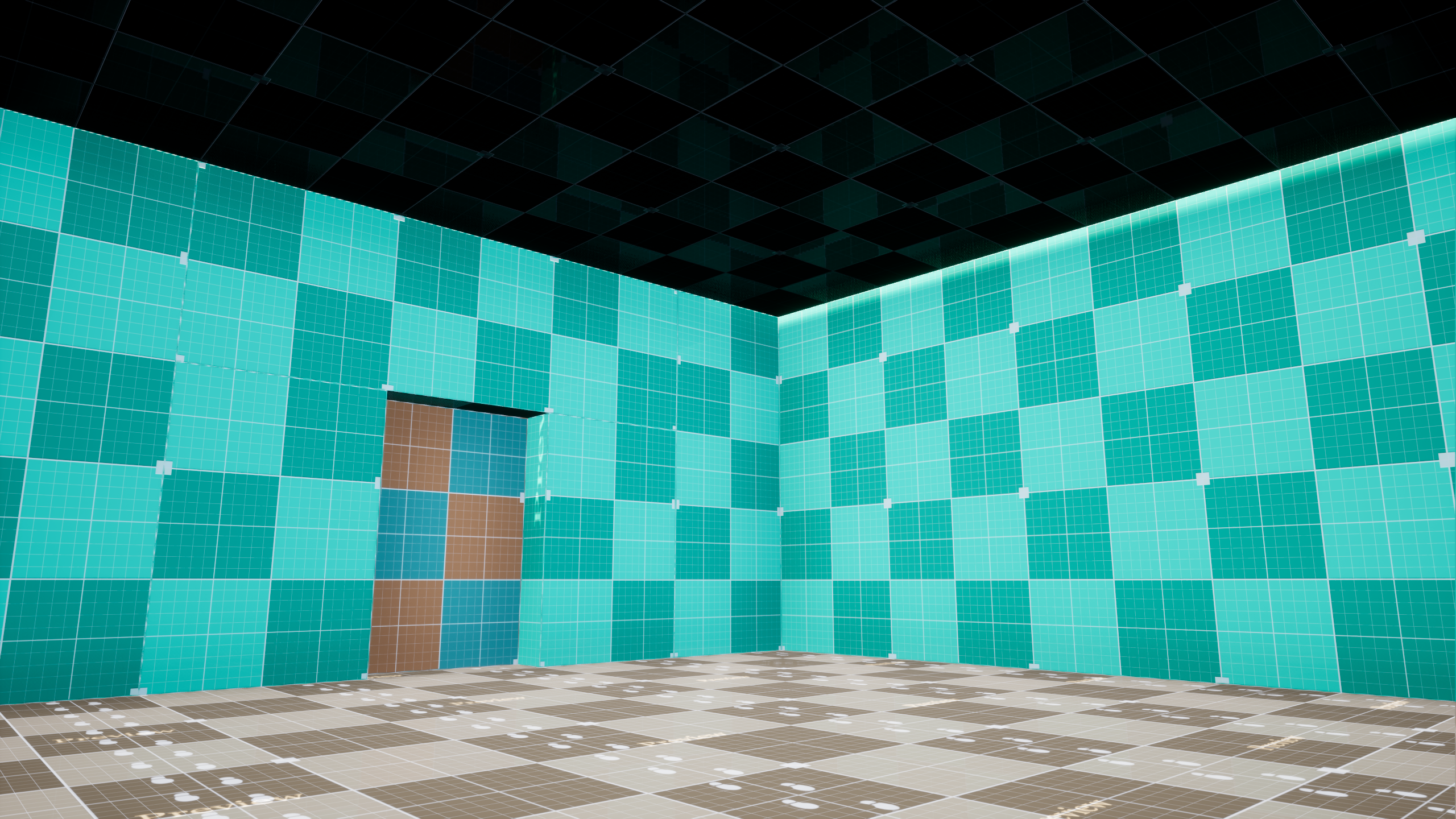
BEFORE / AFTER
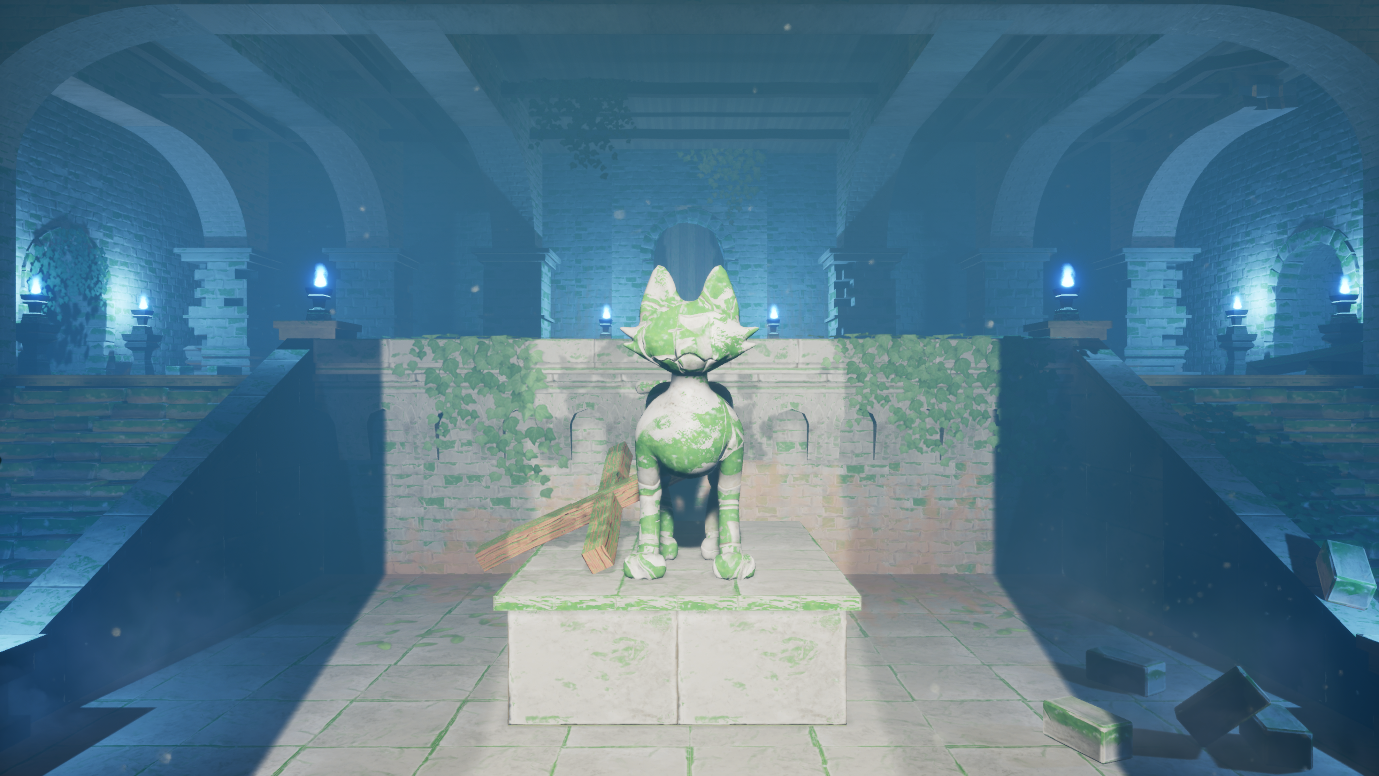
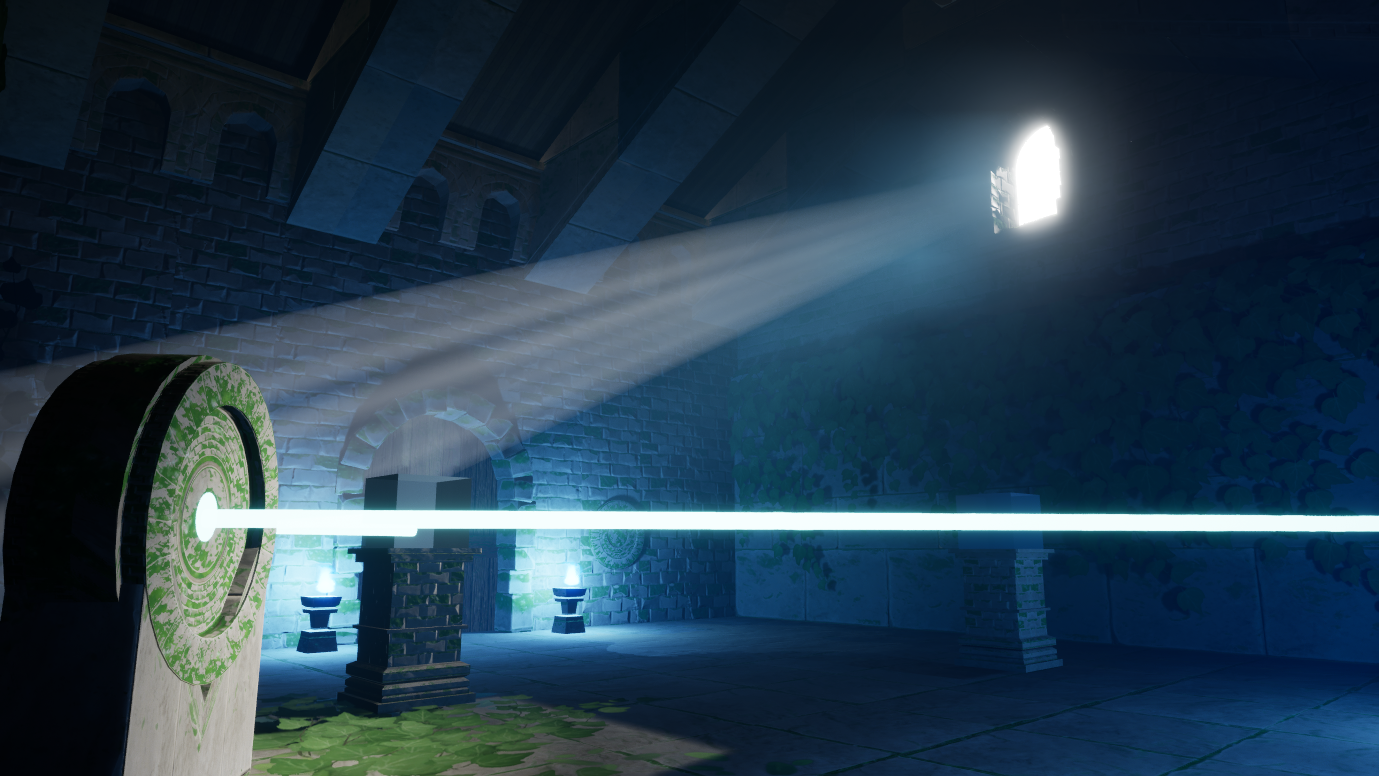
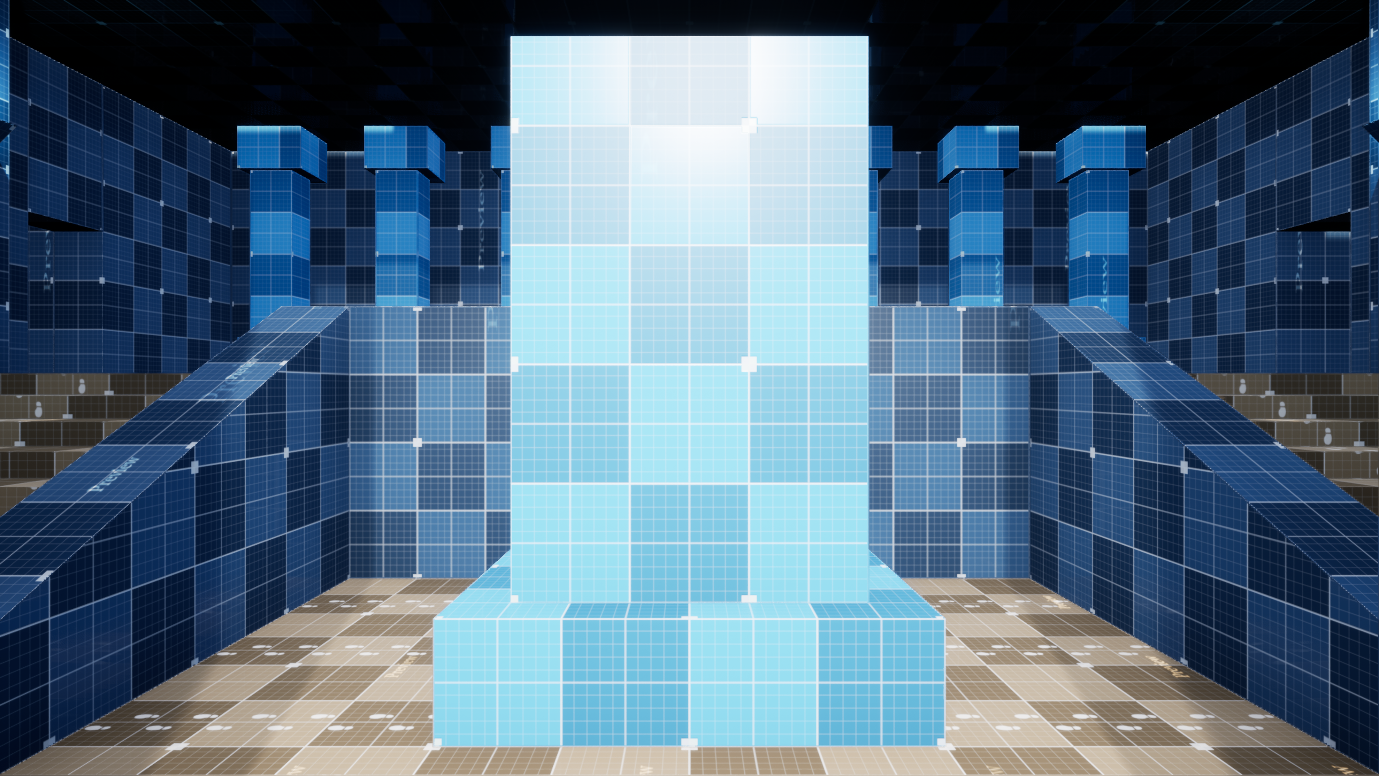
The same area before and after the environmental art pass. General geometry is unchainged, but now there is the addition of the puzzles, lighting, and environment dressing.
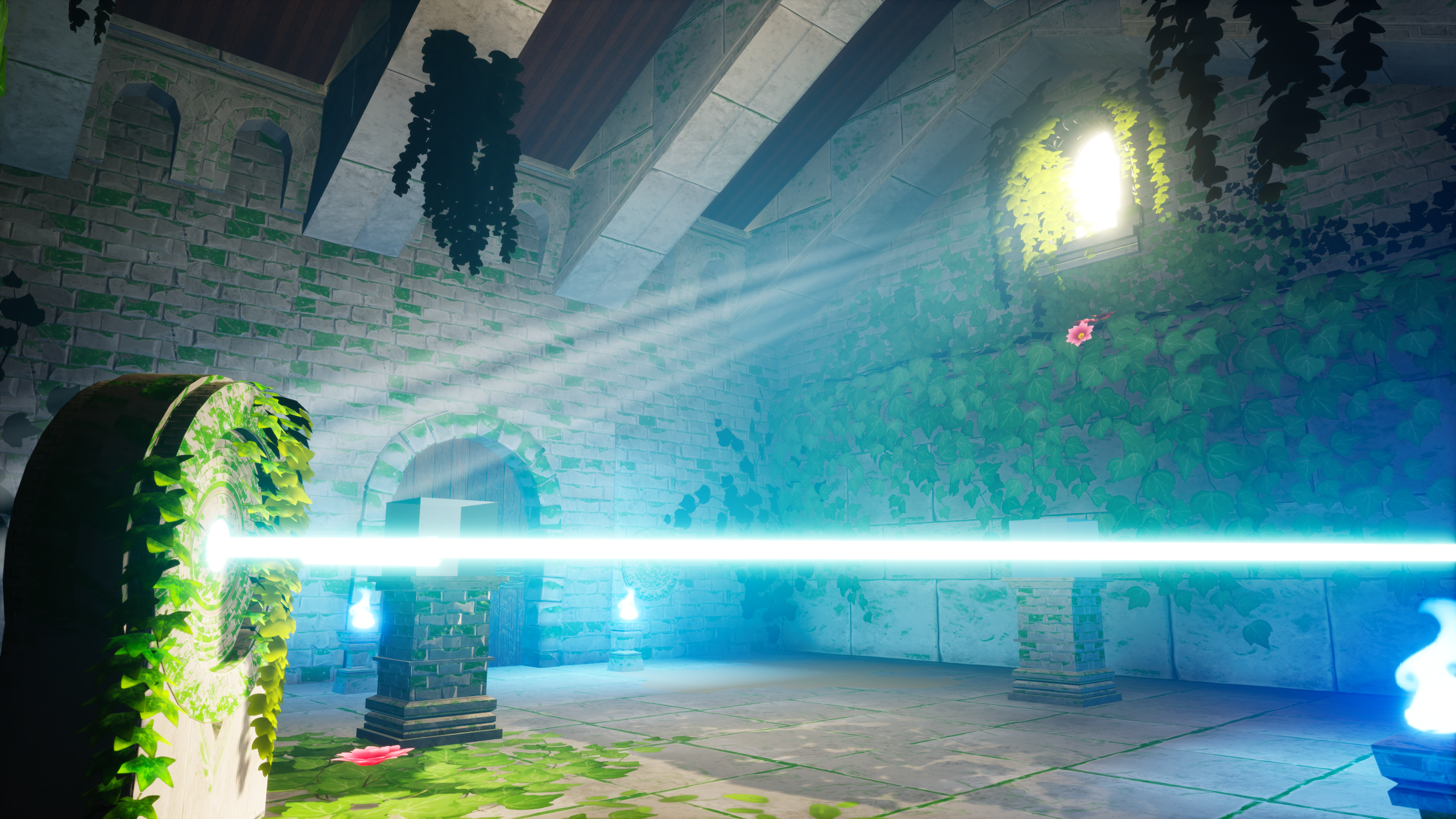
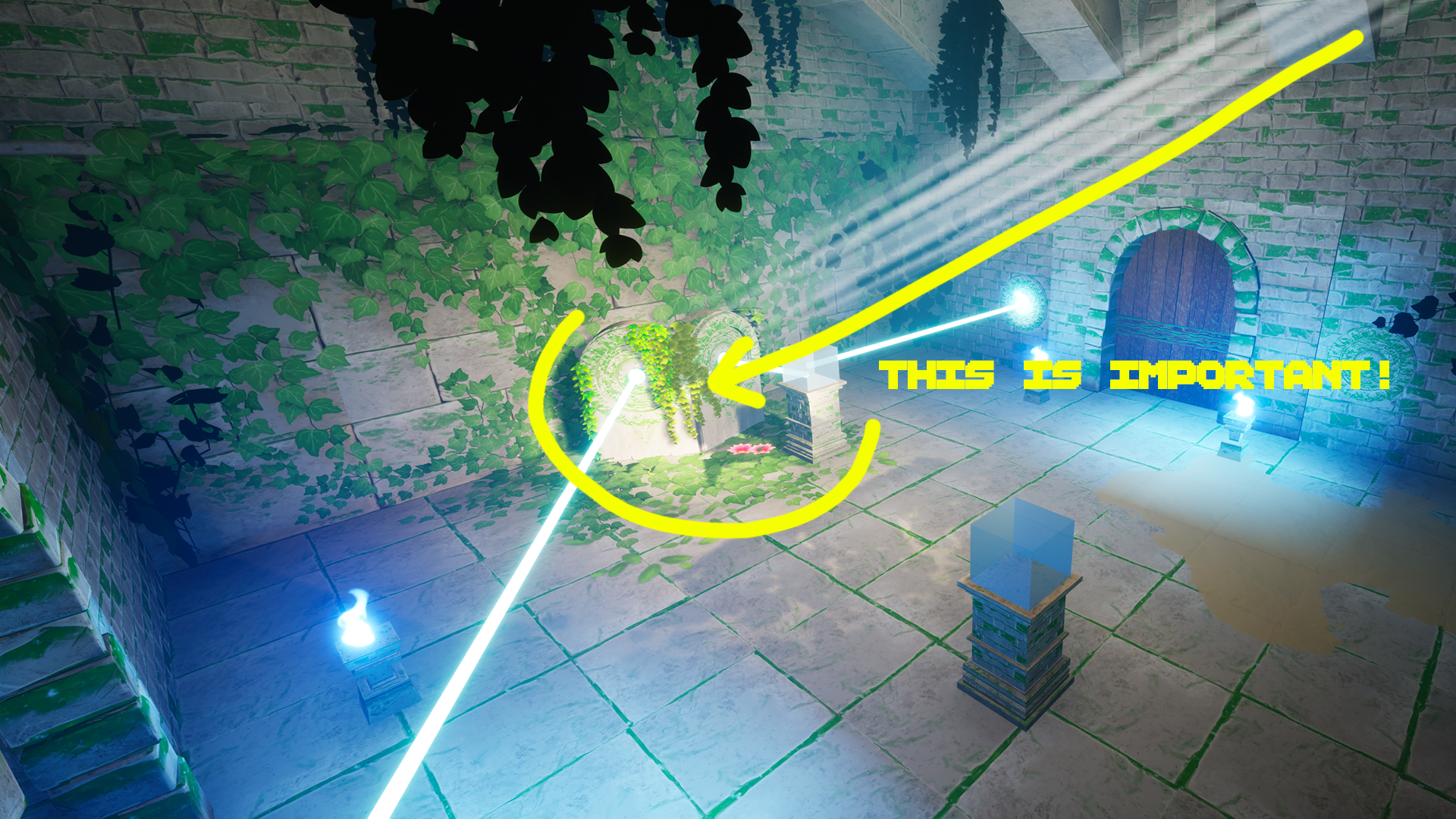
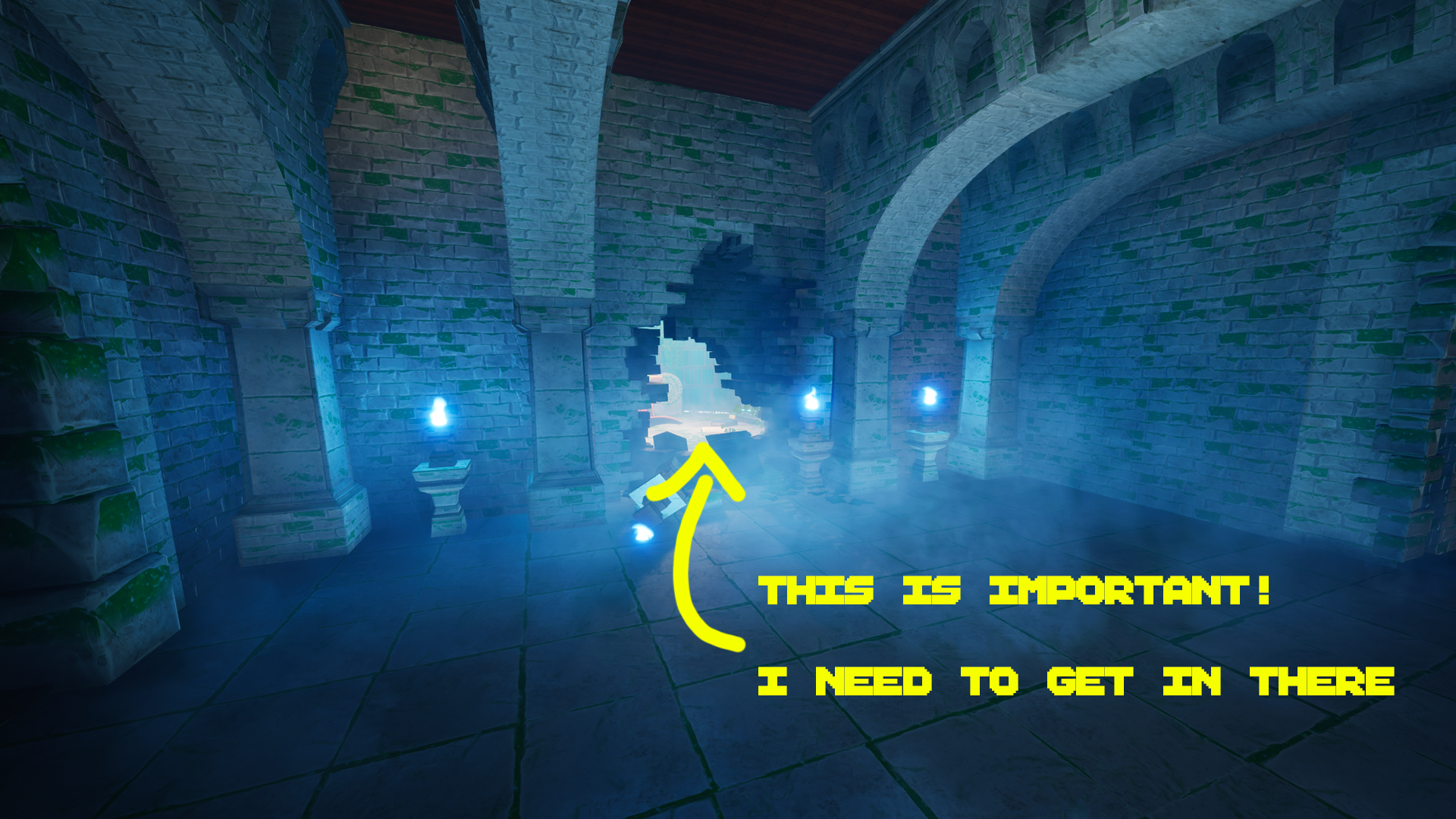
VISUAL CUES — PUZZLE HINT USING LIGHTING
We didn't want much hand holding, and wanted to stray away from tutorial screens overall, so instead of explicitly telling the player "You should pay attention to this" I used light to communicate that. The ruins are dark, so the player will subconciously feel like these lit up components are important.
// SCREENSHOT_LOG