<< BACK TO PORTFOLIO

APEX LEGENDS LTM ANALYSIS

2026  |  PERSONAL PROJECT  |  GAME MODE ANALYSIS & LTM CONCEPT  |  RESEARCH & PITCH DECK

I don't just play live-service games. I study why their modes succeed or disappear. This deck scores six Apex Legends limited-time modes on permanence, return frequency, developer signals, and community demand, sorts them into tiers, and pulls out what the winners have in common. Then it puts that analysis to work in an original LTM concept, Re-Kill, where kills earn your team respawns.

Fan analysis and concept, not affiliated with Respawn or EA.

// KEY_RESPONSIBILITIES

LIVE-SERVICE MODE ANALYSIS

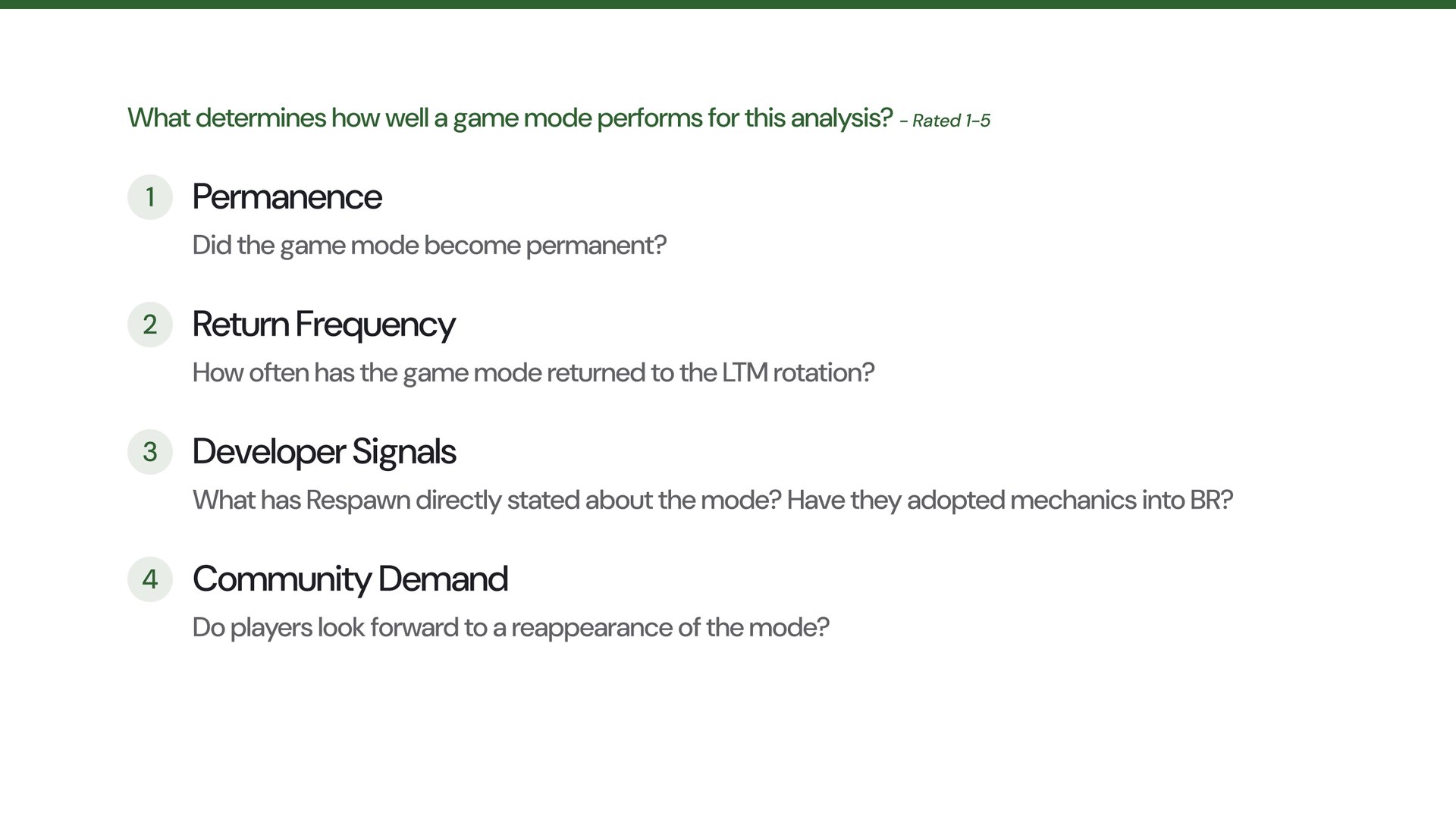
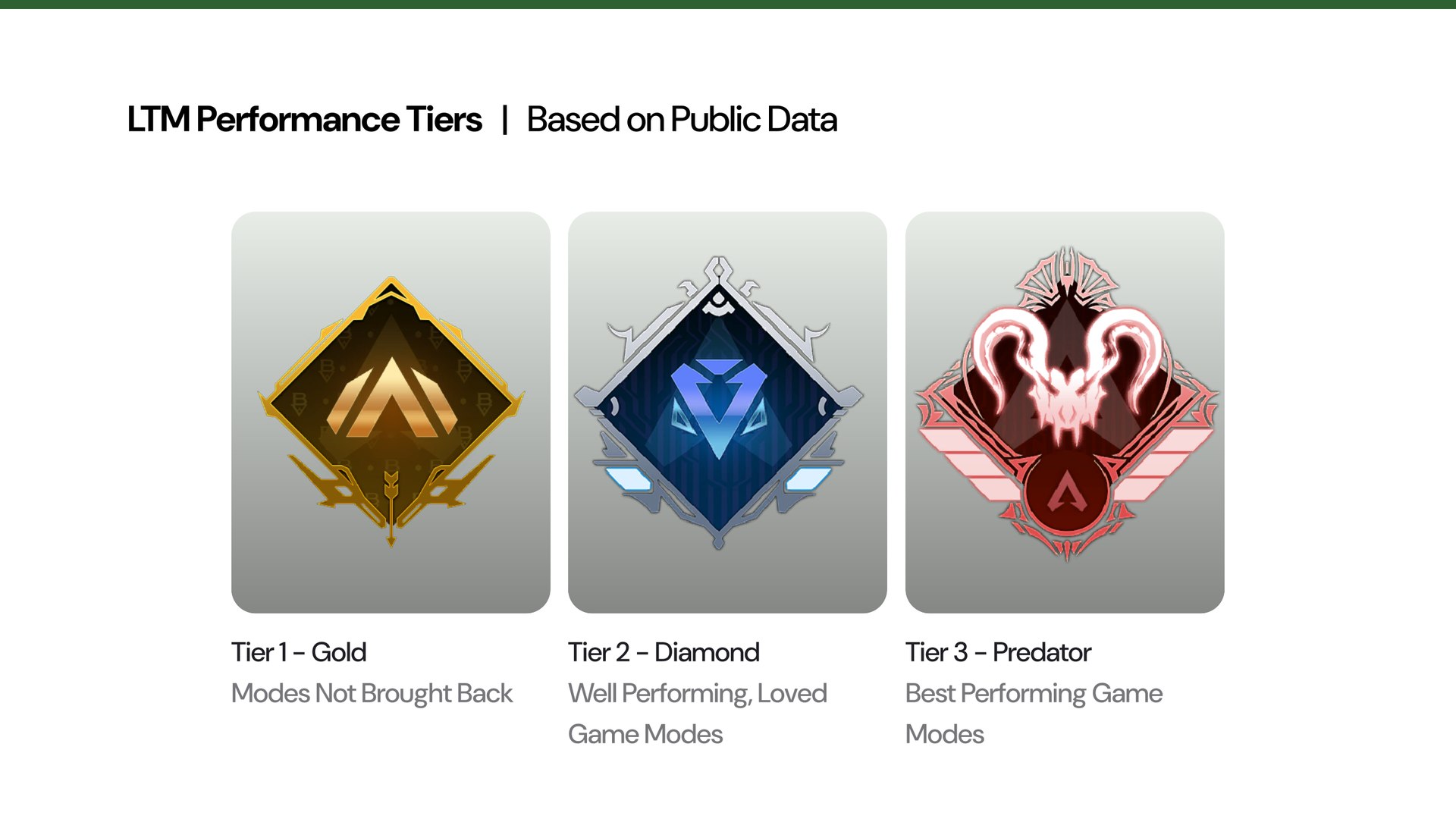
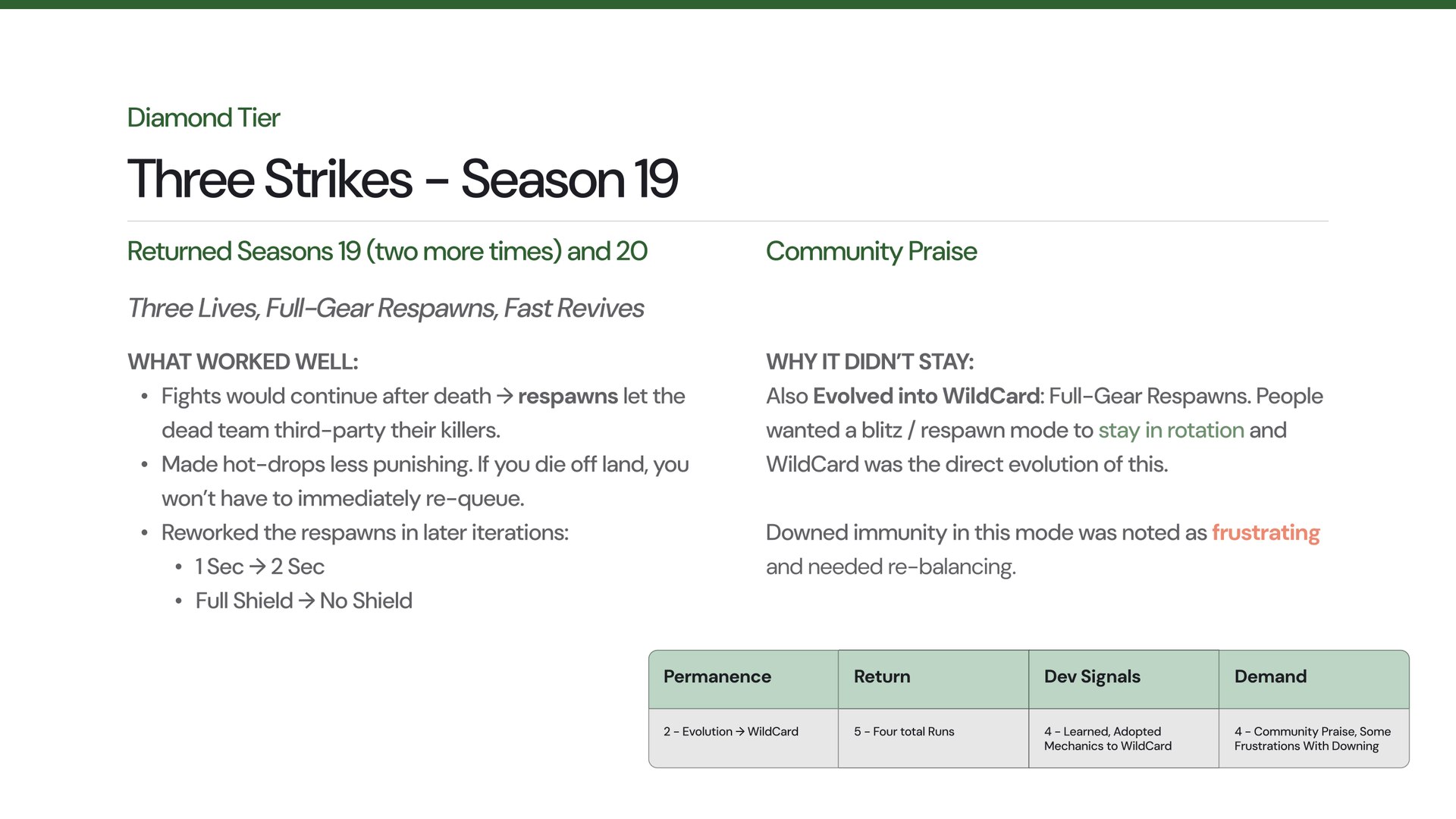
Built a 1-5 scoring rubric (permanence, return frequency, developer signals, community demand) and used public data to rank six Apex LTMs into Gold, Diamond, and Predator tiers, breaking down what worked and why modes did or didn't stay.

ORIGINAL LTM CONCEPT

Designed Re-Kill, a mode where kills fill your team's respawn pool, grounding each rule in the analysis: simplified evo-based loot like WildCard, and fast-paced respawns that match the game's current push toward accessible, casual play.

TEST PLAN & METRICS

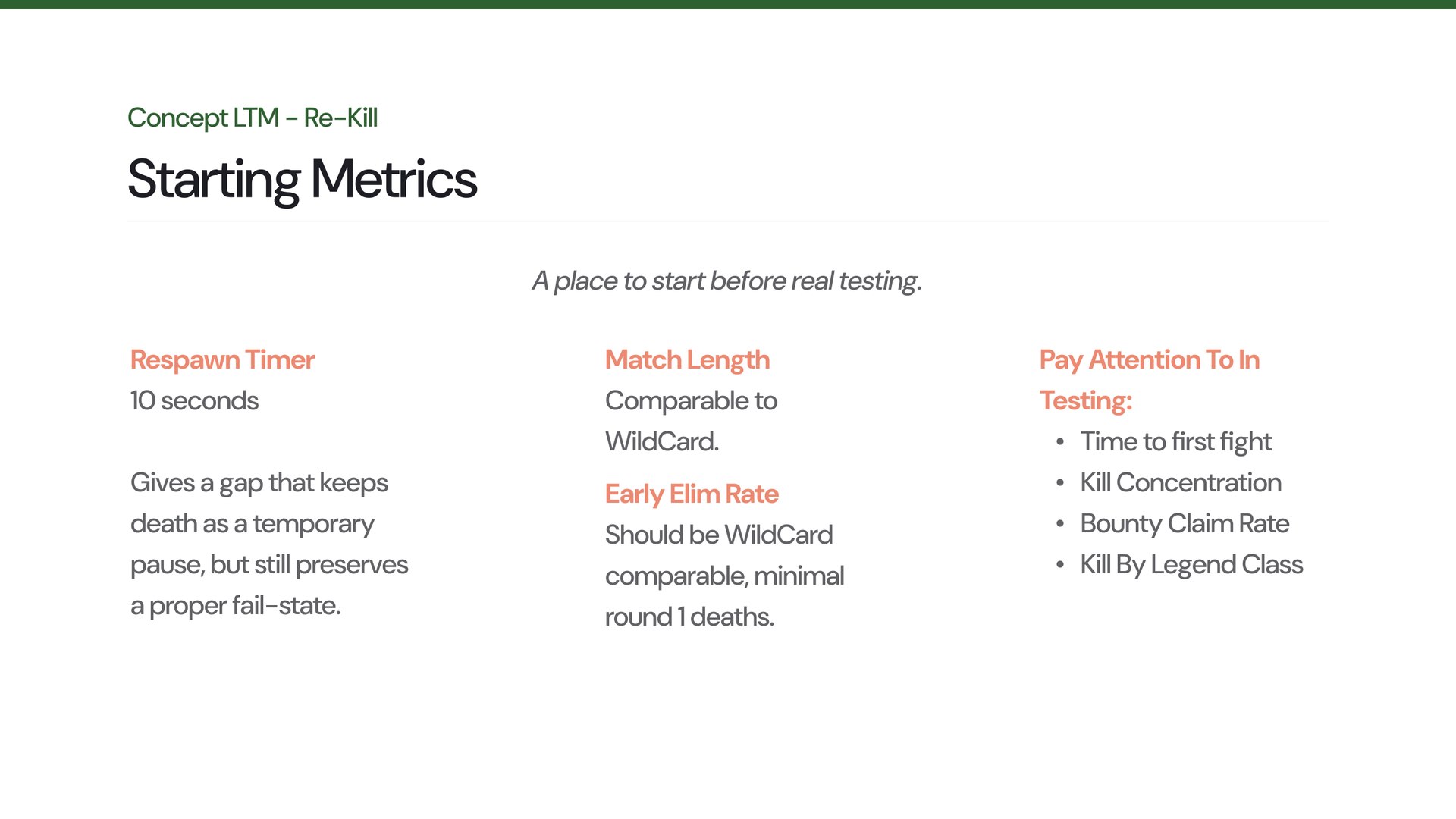
Set starting values (a 10 second respawn timer, WildCard-comparable match length), listed the variants worth testing, the metrics to watch, and the open questions the mode needs player feedback on.

// THE_DECK

Click any slide to view it full screen.
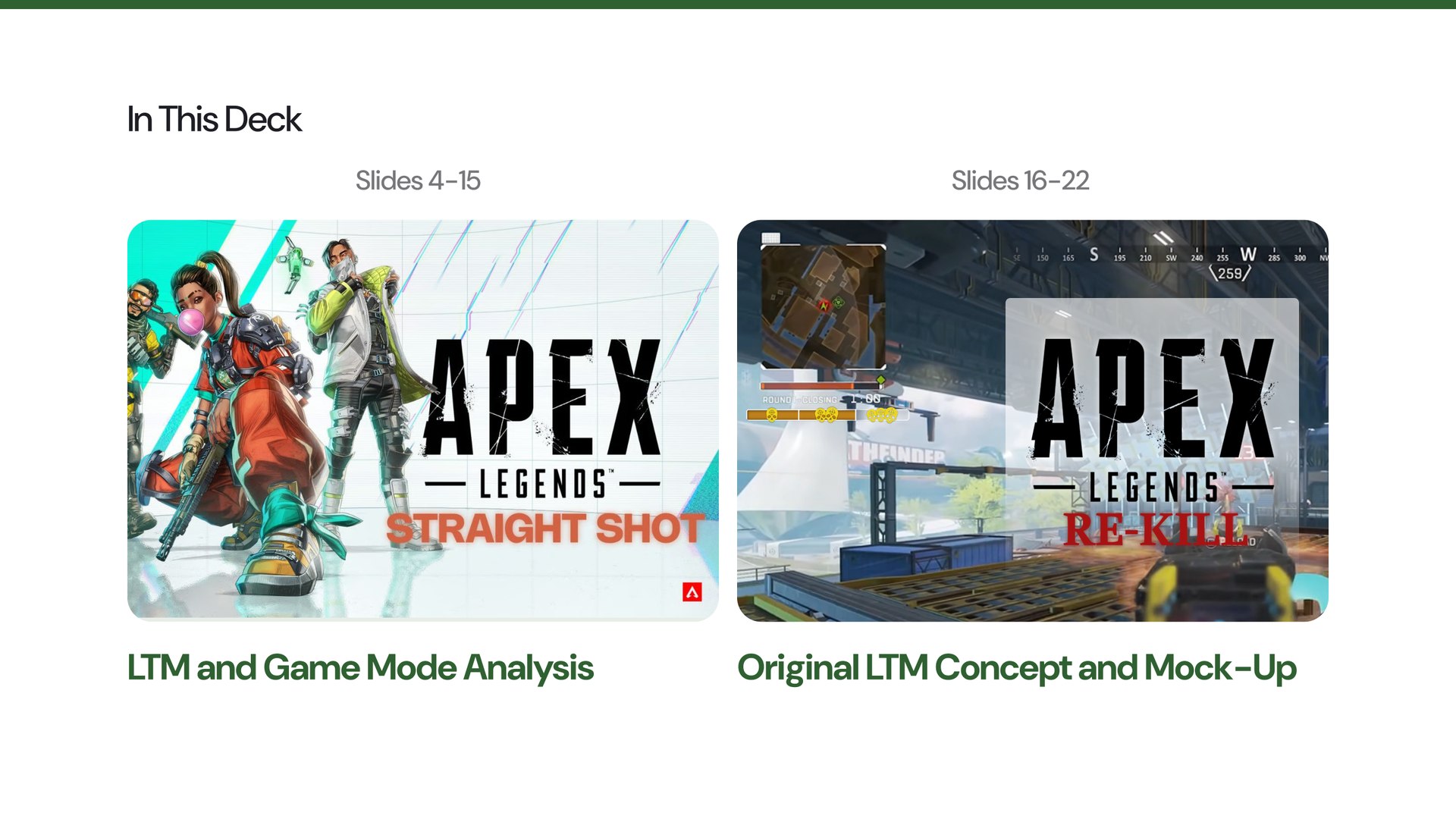
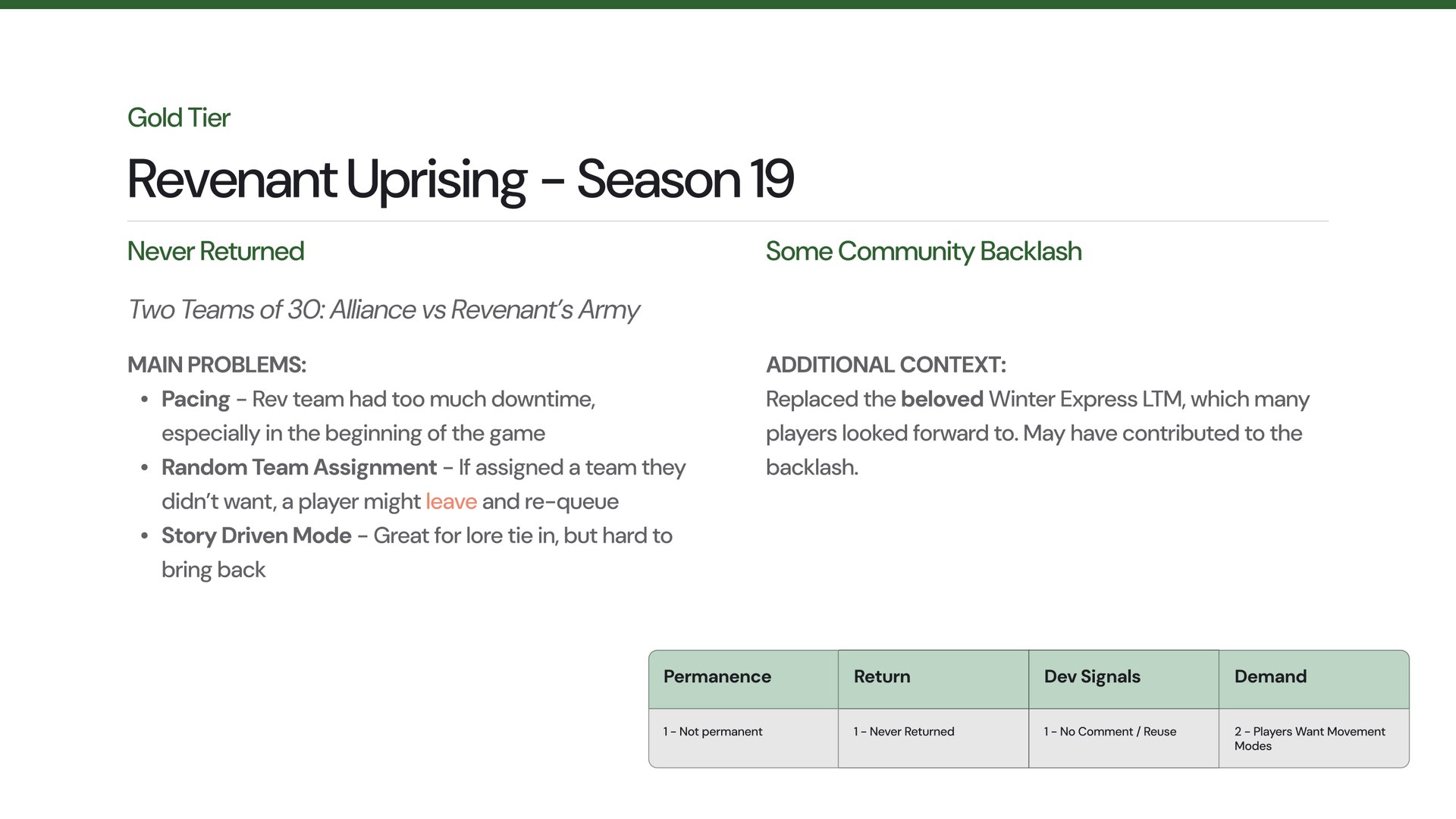
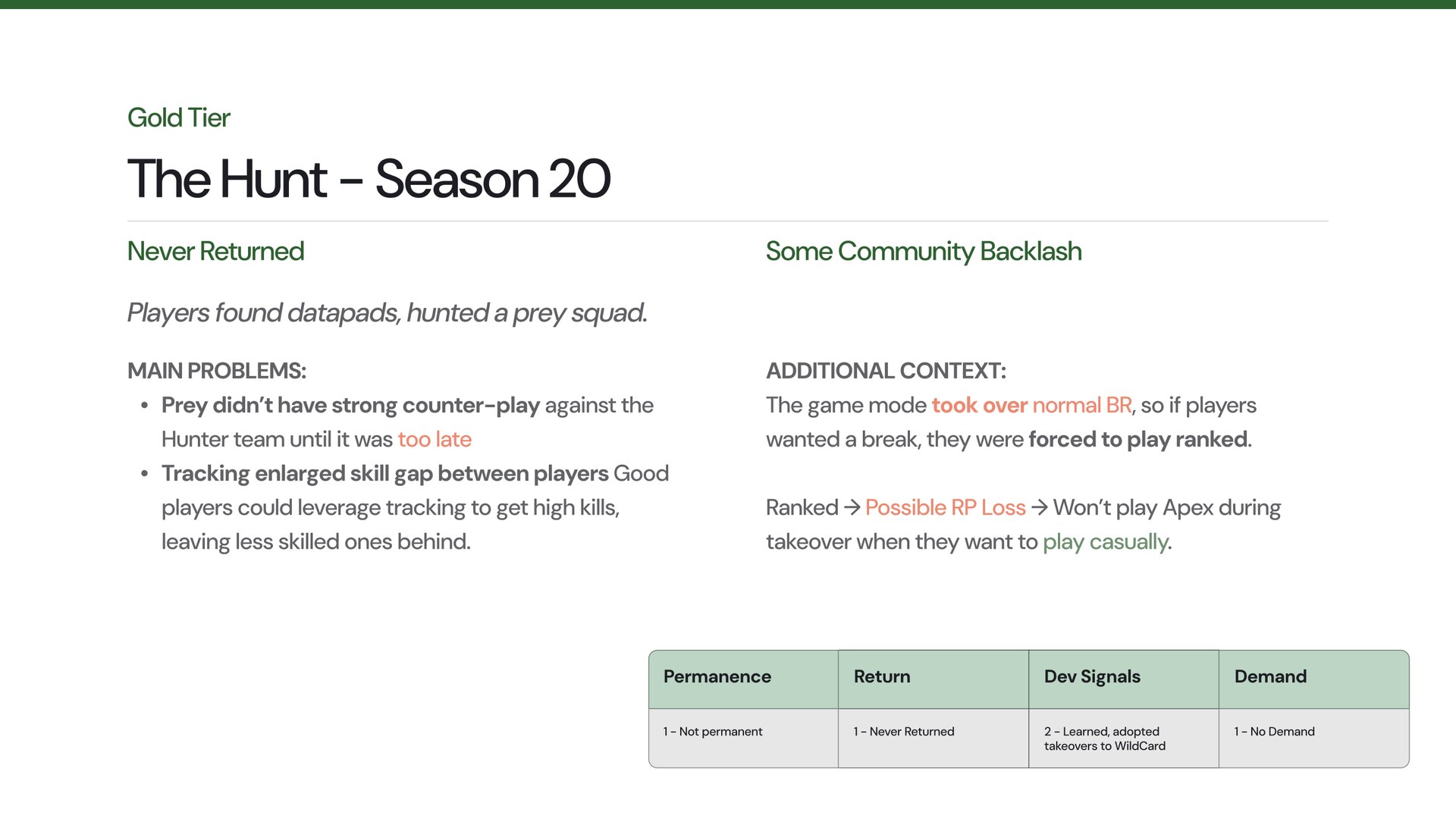
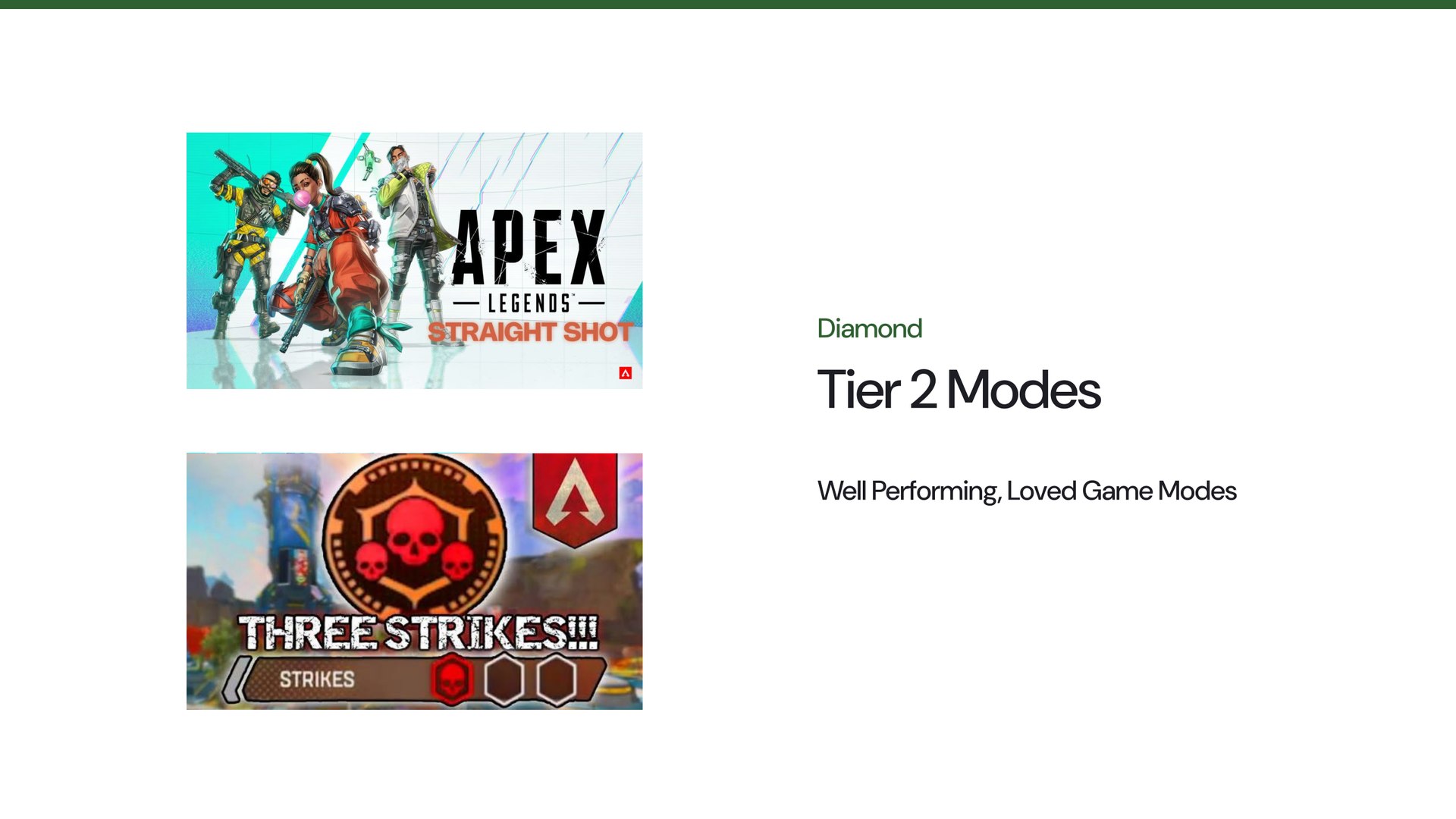
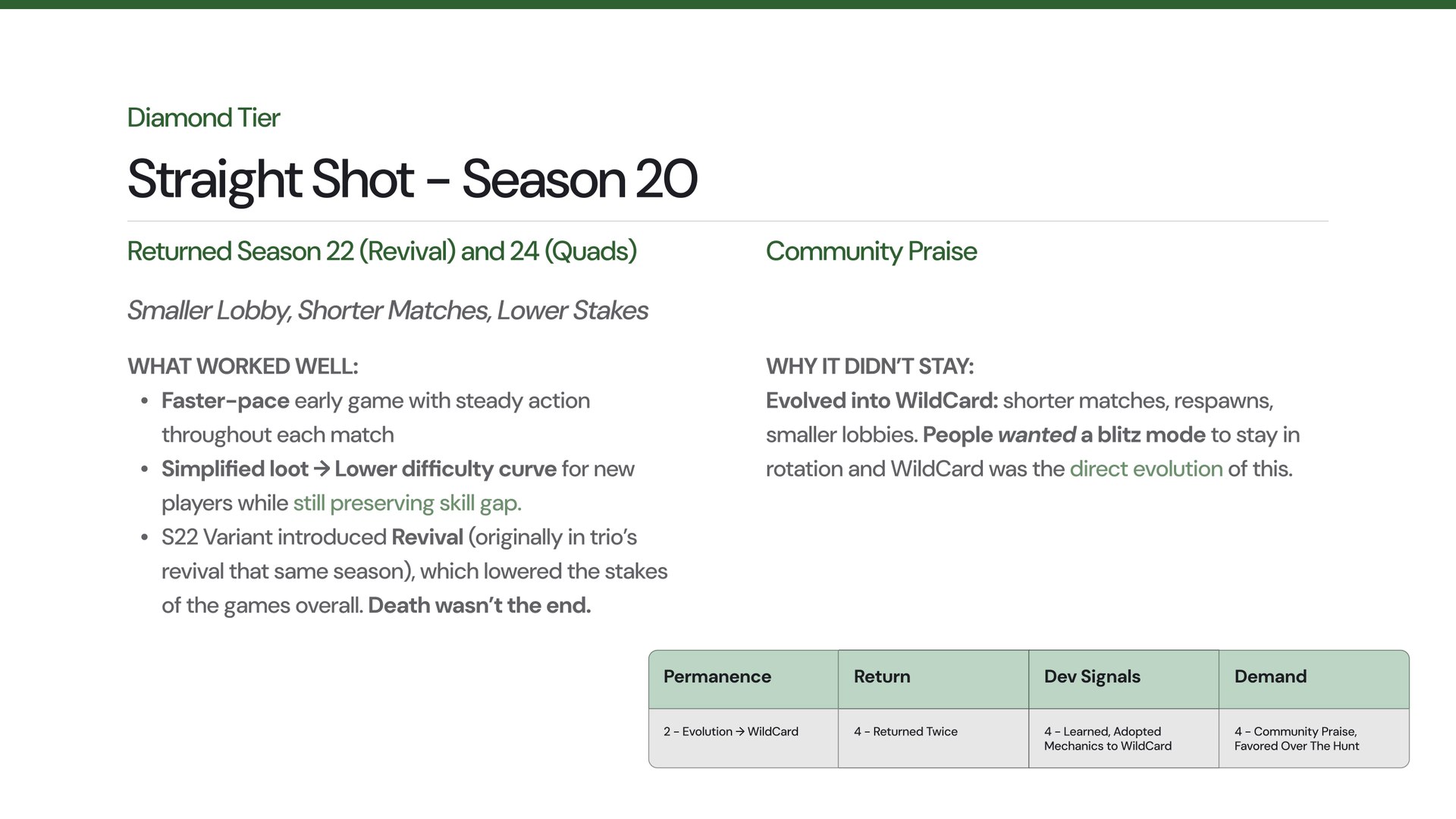
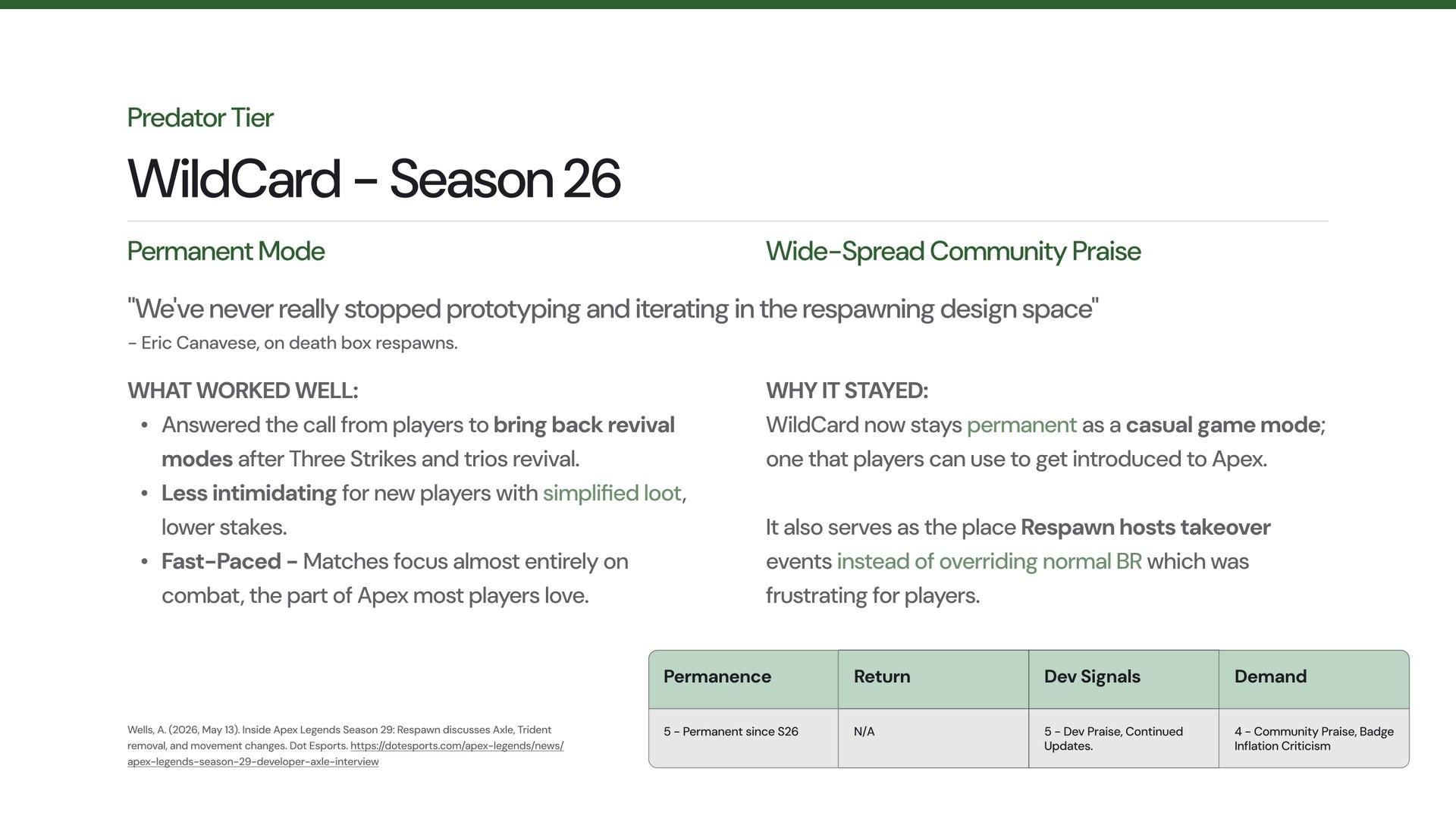
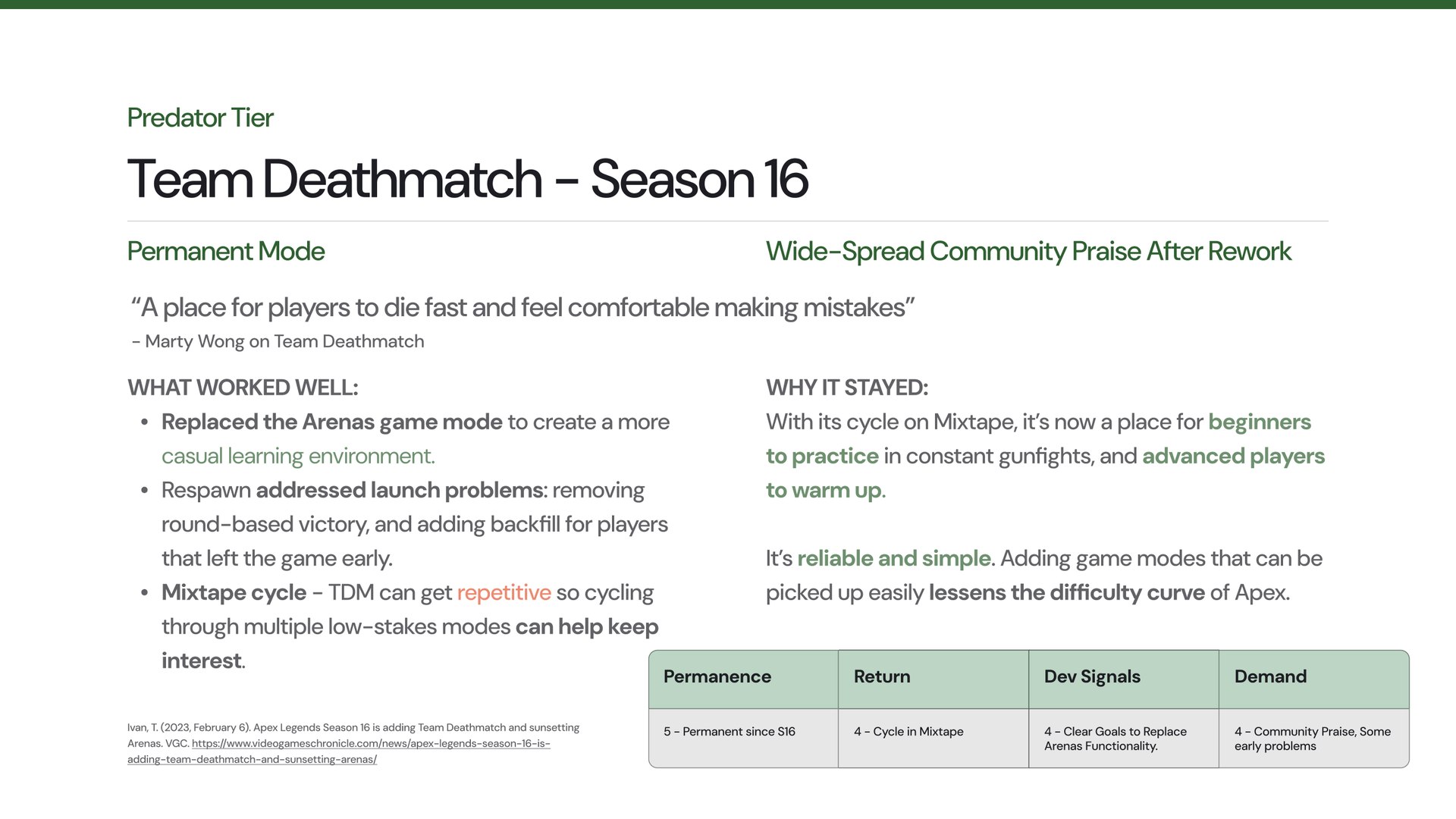
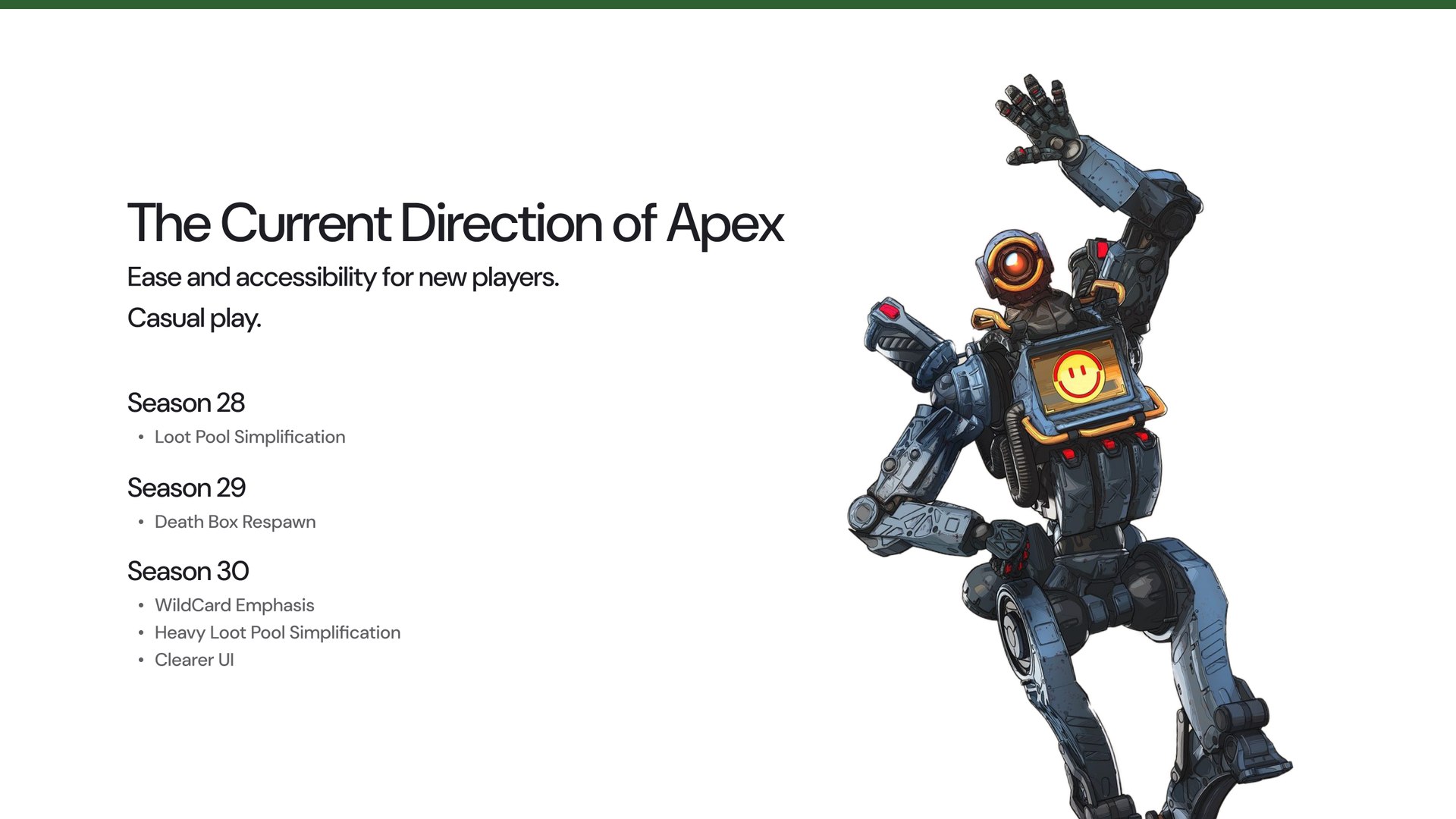
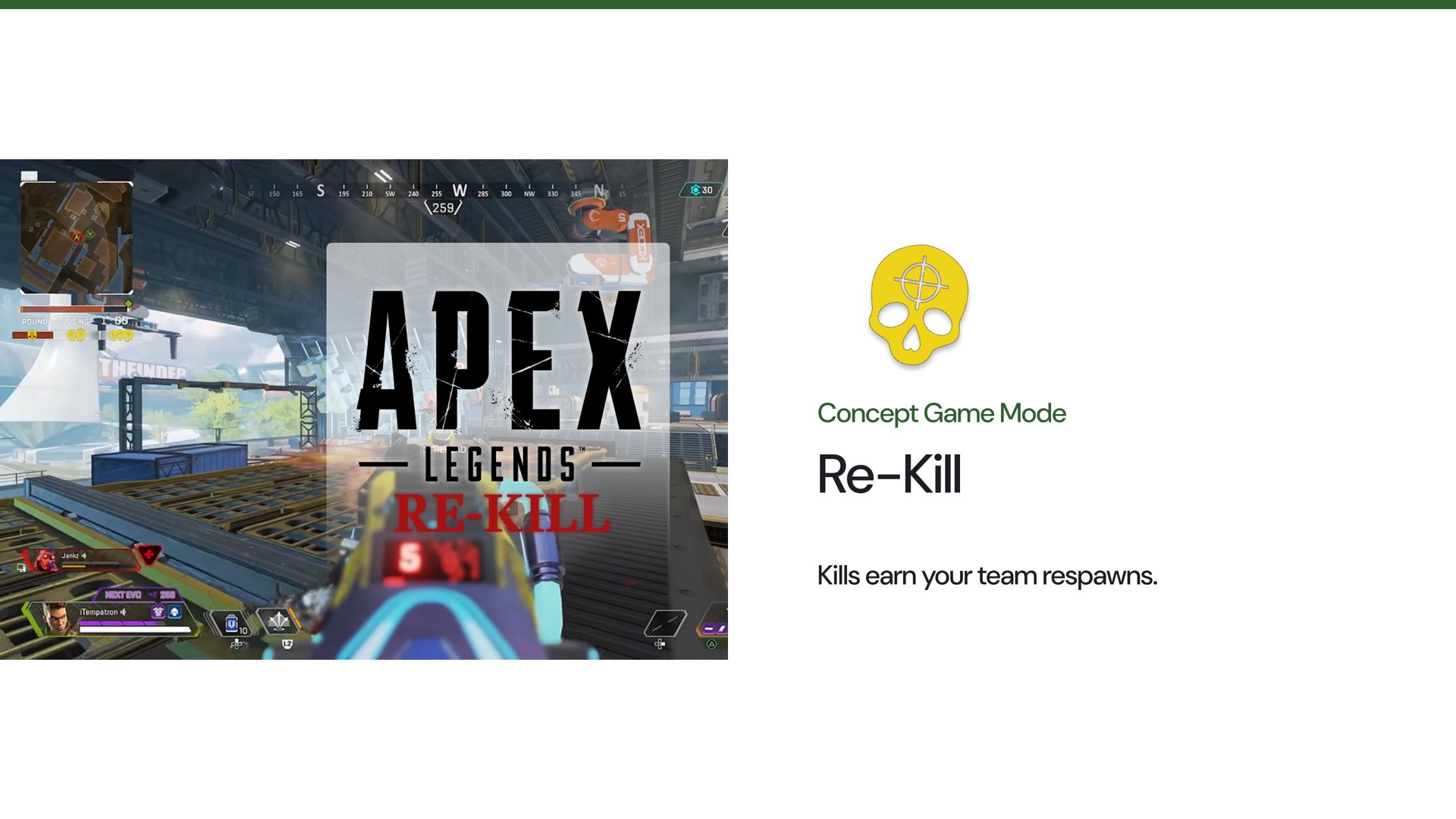
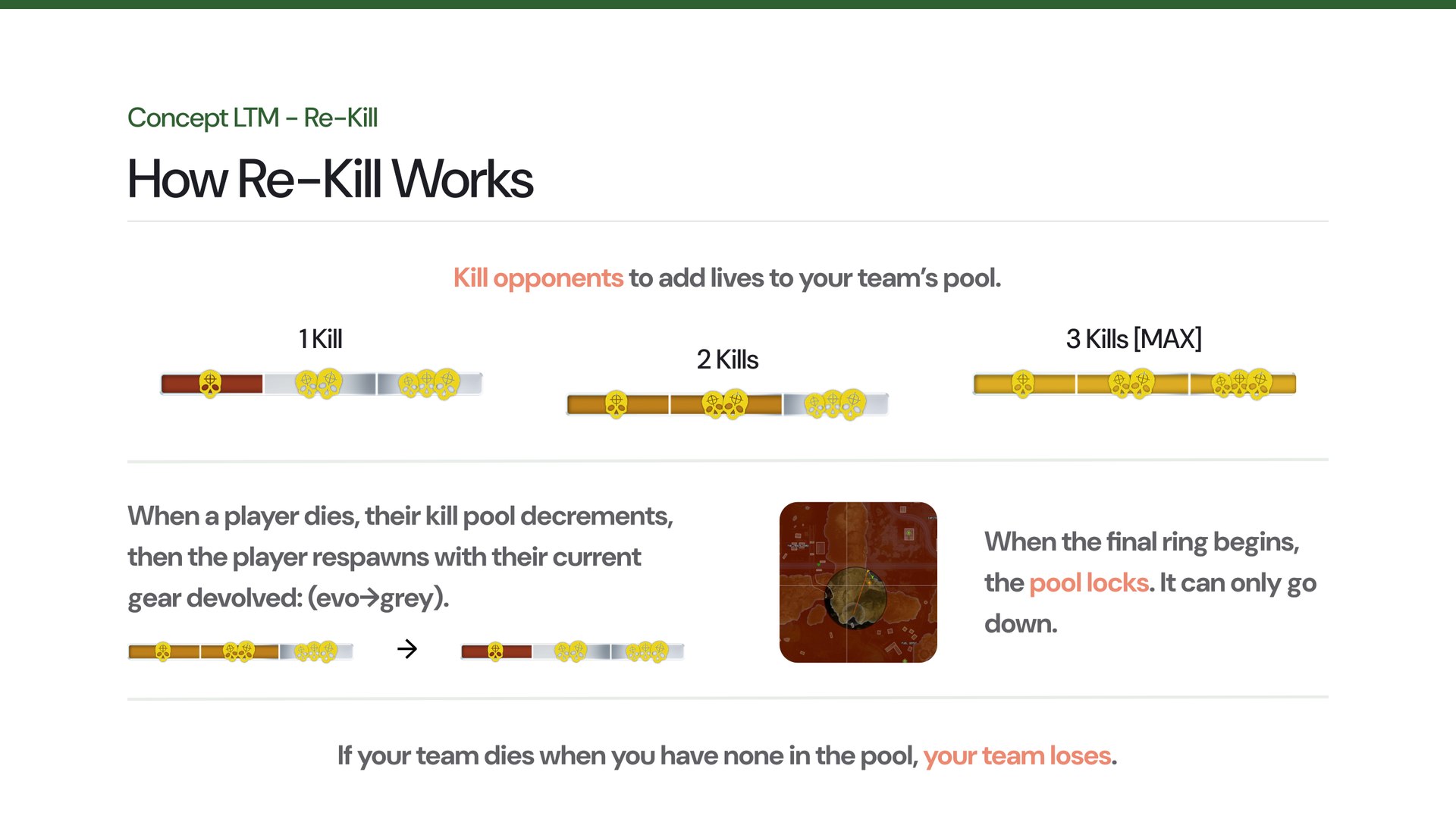
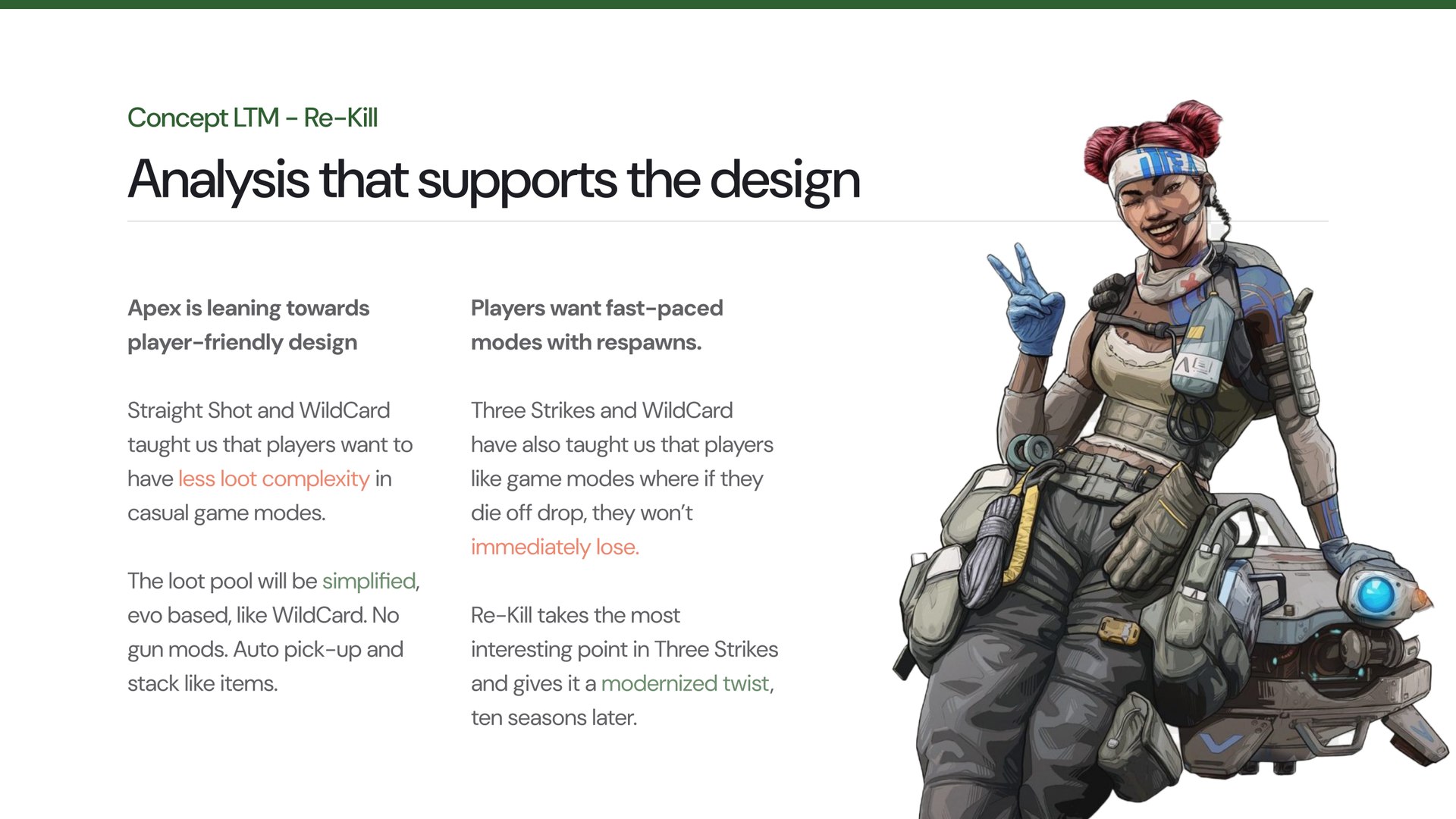
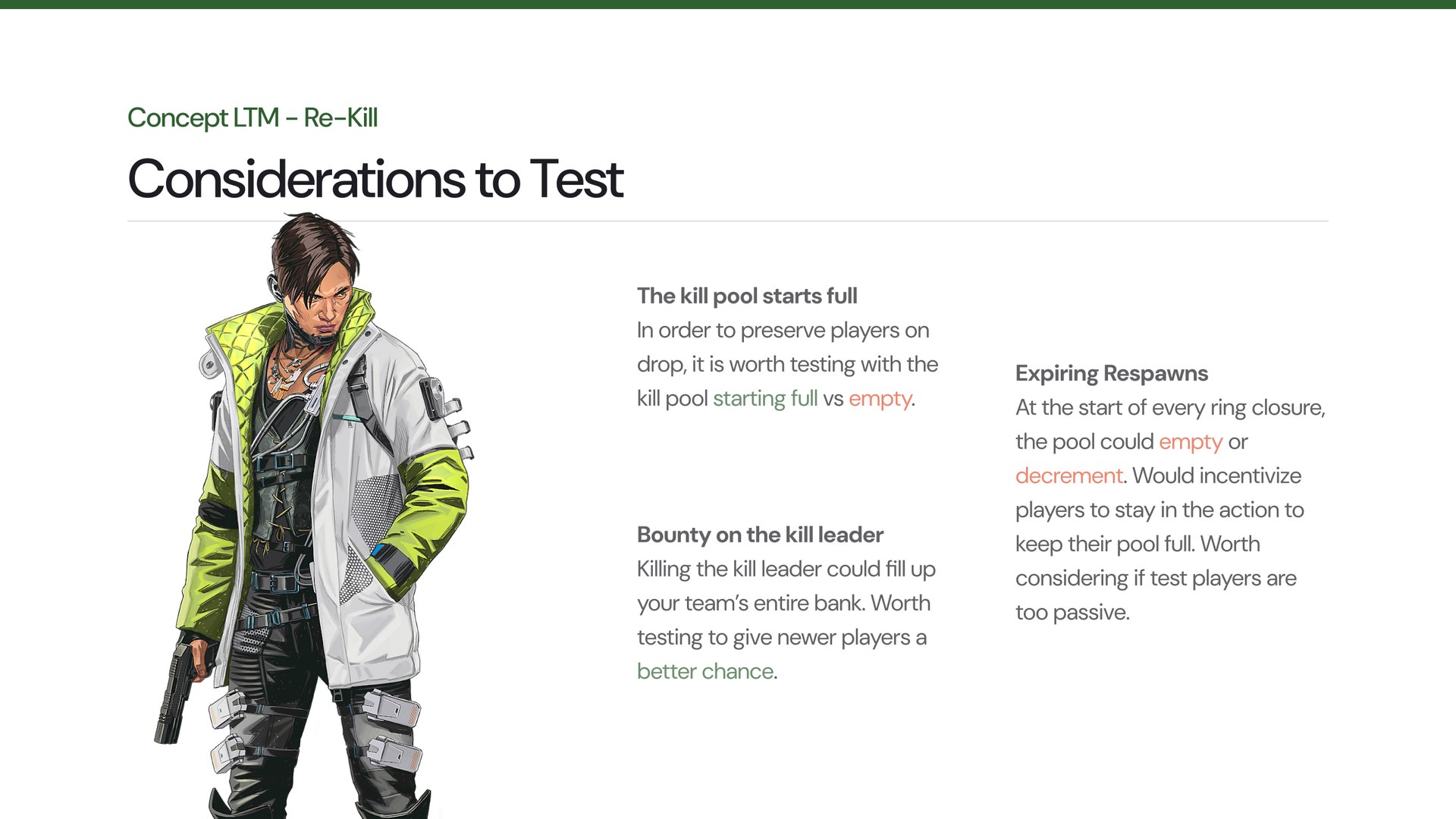
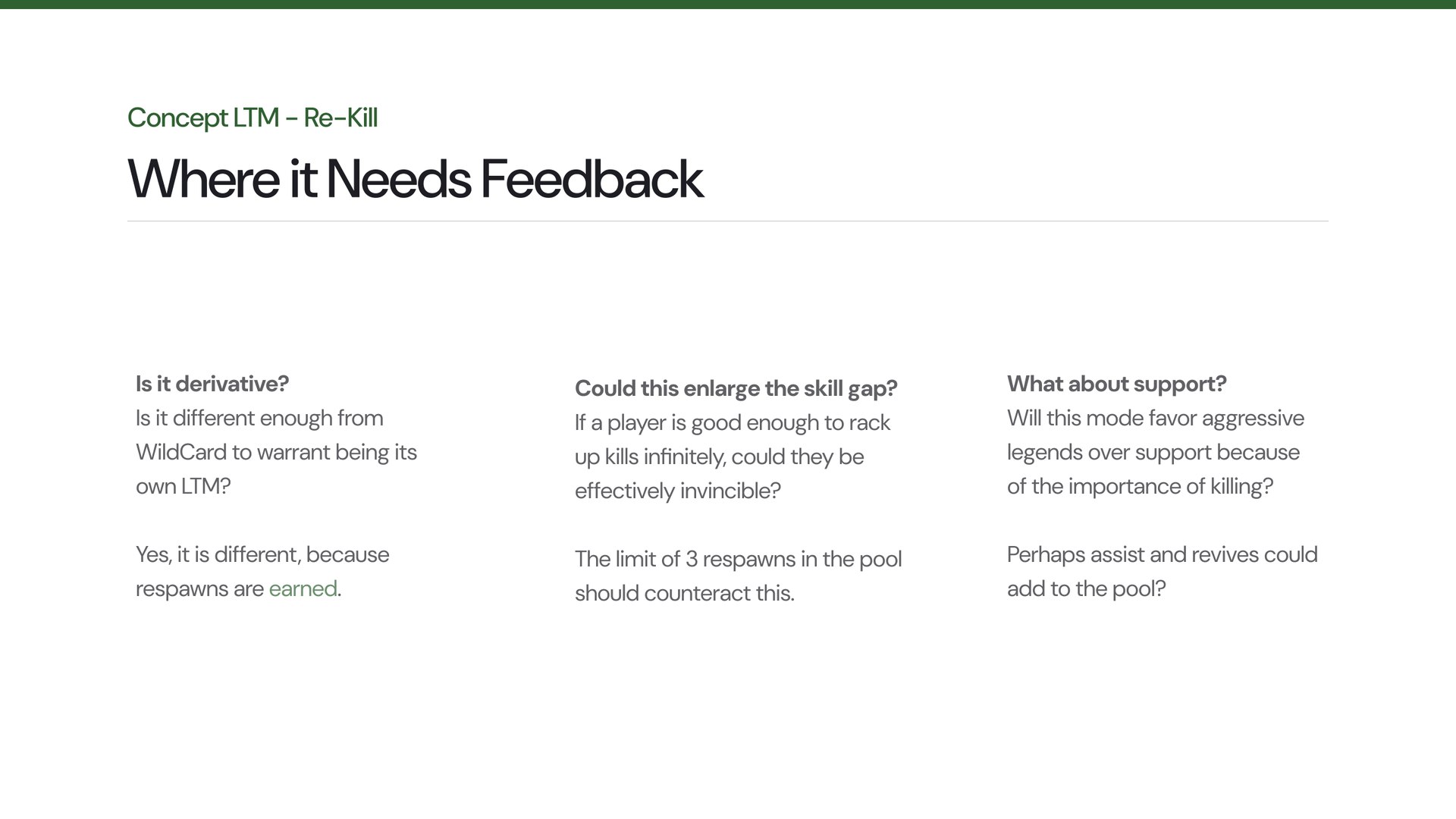
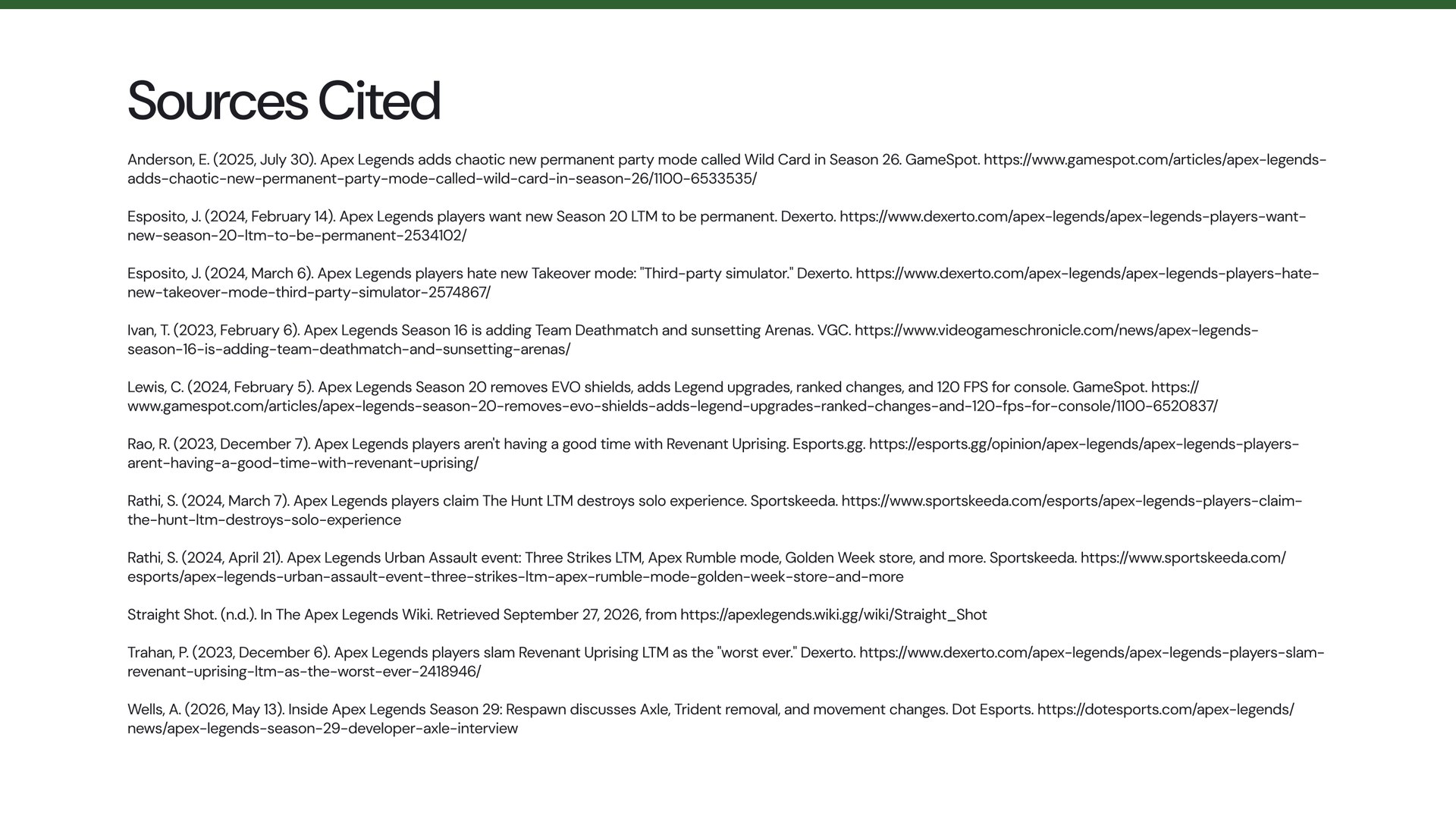
Slide 1: Title slide: Apex Legends LTM Analysis, and my original concept LTM. Fan analysis, not affiliated with Respawn or EA Slide 2: I don't just play live-service games. I study why their modes succeed or disappear Slide 3: In this deck: LTM and game mode analysis (slides 4-15), and the original LTM concept Re-Kill (slides 16-22) Slide 4: Scoring criteria, rated 1-5: permanence, return frequency, developer signals, community demand Slide 5: LTM performance tiers based on public data: Gold, Diamond, Predator Slide 6: Tier 1 Gold: modes not brought back, Revenant Uprising and The Hunt Slide 7: Gold tier: Revenant Uprising, Season 19. Never returned; main problems were pacing, random team assignment, and a story-driven format Slide 8: Gold tier: The Hunt, Season 20. Never returned; prey lacked counter-play and tracking widened the skill gap Slide 9: Tier 2 Diamond: well performing, loved modes, Straight Shot and Three Strikes Slide 10: Diamond tier: Straight Shot, Season 20. Faster early game and simplified loot; evolved into WildCard Slide 11: Diamond tier: Three Strikes, Season 19. Respawns kept fights going and made hot drops less punishing Slide 12: Tier 3 Predator: best performing modes, WildCard and Team Deathmatch Slide 13: Predator tier: WildCard, Season 26. Permanent mode answering the call for revival modes Slide 14: Predator tier: Team Deathmatch, Season 16. Permanent casual learning space after its rework Slide 15: The current direction of Apex: ease and accessibility for new players, and casual play, across Seasons 28 to 30 Slide 16: Concept game mode Re-Kill: kills earn your team respawns Slide 17: How Re-Kill works: kills add lives to your team's pool, up to three; the pool locks when the final ring begins Slide 18: Analysis that supports the design: simplified evo-based loot, and fast-paced modes with respawns Slide 19: Considerations to test: whether the kill pool starts full, bounties on the kill leader, and expiring respawns Slide 20: Starting metrics: 10 second respawn timer, WildCard-comparable match length and early elimination rate, and what to watch in testing Slide 21: Where it needs feedback: is it derivative of WildCard, could it widen the skill gap, and does it favour aggressive legends over support Slide 22: This is why I want to work in game design: answering questions like these with real player data Slide 23: Sources cited